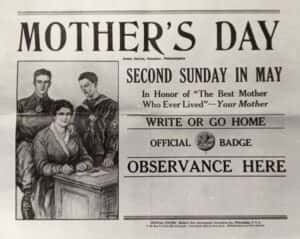
On May 9, 1914, President Woodrow Wilson officially proclaimed the very first Mother's Day — a moment that gave birth to one of America's most beloved holidays. But while we now think of it as a straightforward celebration steeped in tradition, the road to its creation was anything but simple. In fact, the holiday's origins are tangled up in conflict and controversy that few people know about.
It all traces back to 1858, when a homemaker from Appalachia named Ann Jarvis began advocating for improved sanitation. She organized efforts she referred to as "Mothers' Work Days," rallying women around public health causes. When the Civil War erupted, Jarvis brought together women from both sides of the conflict, pushing them to improve the terrible sanitary conditions that soldiers endured. Once the fighting ended, she dedicated herself to bridging the divide between Union families and Confederate families.
Ann Jarvis left a profound mark on Julia Ward Howe, the well-known social activist. Drawing together the various causes and ideas that Jarvis had championed, Howe pushed for the establishment of a holiday celebrating mothers in the wake of the Civil War. Her vision tied the holiday to a broader message of peace and reconciliation. It was Ann Jarvis' daughter, Anna Jarvis, who truly picked up the torch, launching a determined campaign for a dedicated day honoring mothers. Gradually, state after state began recognizing Mother's Day as an official holiday. The movement culminated in 1914, when Congress passed legislation establishing it as a national holiday — and Woodrow Wilson signed it into reality on May 9. Almost immediately, businesses of every kind jumped on the bandwagon, flooding the market with Mother's Day cards and gifts. That's precisely when the trouble started.
The commercialization of the holiday infuriated Anna Jarvis. By the early 1920s, she was passionately arguing that the proper way to honor one's mother was through heartfelt, handwritten letters filled with gratitude and love — not store-bought cards and presents. She launched boycotts across the country, targeting businesses that profited from the holiday's commercialization. Her frustration only deepened over time; she went so far as to threaten lawsuits against any company selling Mother's Day merchandise. Her protests even landed her under arrest for disturbing the peace. In the end, she disowned the very holiday she had fought so hard to create.