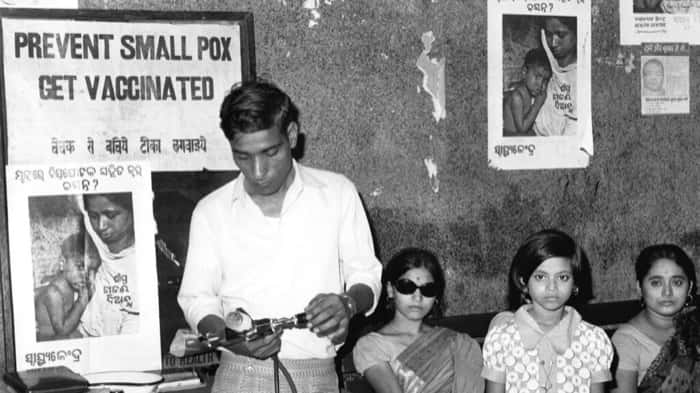
On May 8, 1980, the World Health Organization made a historic announcement: smallpox, one of humanity's deadliest scourges, had been wiped from existence. The weapon that ultimately brought it down? The smallpox vaccine. But getting to that triumphant moment was an agonizingly slow journey.
The story really begins back in 1796, when Edward Jenner did something revolutionary — he not only created a vaccine against smallpox but essentially pioneered the entire concept of vaccination. People of that era already understood that surviving a bout of smallpox granted lifelong immunity, which led some bold individuals to deliberately try contracting a "mild" case as a form of protection. As you might imagine, this strategy tended to go very, very wrong.
But Edward Jenner had a different idea brewing. What if cow biology held the key to outsmarting smallpox? He took blood serum from cows infected with cowpox — a bovine relative of smallpox — and injected it into people. His theory was straightforward: exposure to cowpox could train the body to fight off smallpox without subjecting anyone to the actual disease. And remarkably, he was right. Armed with this groundbreaking vaccine, Jenner dared to envision something audacious — the total elimination of smallpox from the planet. What he couldn't have predicted was that nearly 200 more years would pass before that vision became reality.
The early days were rough for Jenner's invention. Public trust was hard to come by, and uptake remained low. Meanwhile, scientists and charlatans alike pushed competing treatments, each hoping to outdo the vaccine. Among the stranger alternatives was the practice of bathing smallpox patients in red light — a remedy that did absolutely nothing. Yet despite being completely useless, this approach stubbornly persisted for a remarkably long time before people finally abandoned it.
Even as acceptance of the vaccine gradually grew, practical hurdles stood in the way. The vaccine required cool storage temperatures, and refrigeration simply didn't exist yet. Eventually, though, a new preservation method emerged that changed everything, allowing vaccination efforts to expand far more quickly. Then, in 1966, nations across the globe united behind a shared mission to fulfill Edward Jenner's centuries-old dream. By 1980, they had done exactly that.