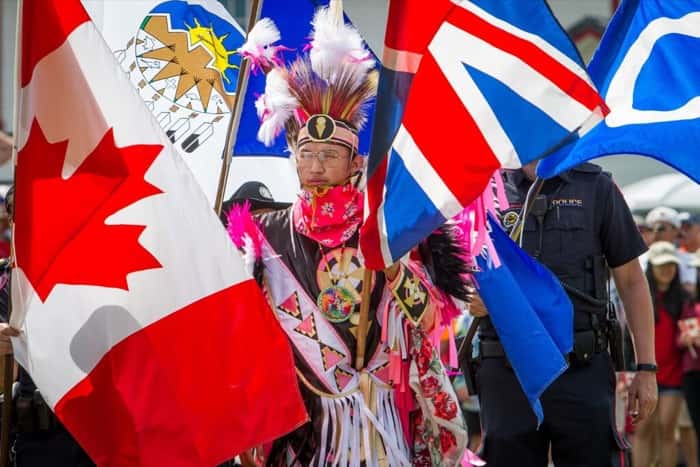
Every nation across the globe has its own special day of celebration — a national holiday that brings people together in shared pride. In Canada's case, that occasion falls on July 1st, and it's fittingly known as Canada Day.
Before it earned its current name, this holiday went by Dominion Day. It stands as one of the handful of statutory holidays observed from coast to coast across the country. Below, you'll find some interesting tidbits about this beloved celebration.
Fun Facts
- Canada Day holds the status of a federal statutory holiday. In total, Canada recognizes five nationwide statutory holidays.
- The holiday honors the anniversary of the Canadian Confederation, which took place on July 1, 1867. On that historic date, three distinct colonies — New Brunswick, the United Canadas, and Nova Scotia — officially merged into one sovereign entity under the British Empire, forming the nation known as Canada.
- When the British North America Act of 1867 was enacted, the occasion was commemorated by the ringing of bells at St. James Cathedral Church in Toronto.
- Originally called Domino Day, the holiday received its current name in 1982 — the very same year Canada cut its ties of dependence on the United Kingdom.
- Celebrations aren't confined to Canadian soil. Canadians living abroad mark the occasion in various locations around the world.
- Some people like to call it Canada's birthday, but that's really an oversimplification. What Canada Day truly commemorates is one of the pivotal milestones in Canada's journey as a nation.
- Expect to see bonfires lighting up the night, fireworks painting the sky, illuminations, and military displays — all part of the wide array of festivities that make the 1st of July so memorable.
- The word Domino traces back to the British North America Act, which referred to the Country as a dominion. Notably, the holiday didn't become a countrywide celebration until 1897, when it was granted statutory status.