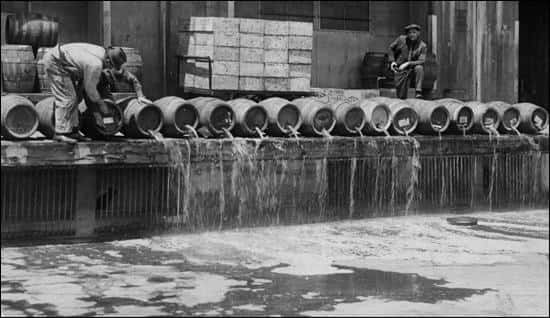
When Congress passed the Volstead Act on October 28, 1919, it set in motion one of the most ambitious — and controversial — social experiments in American history. Officially titled the National Prohibition Act of 1919, this legislation served as the enforcement mechanism for the eighteenth amendment, which outlawed the manufacture, sale, or transportation of intoxicating liquors and beverages across the United States.
The driving force behind the bill was Wayne Wheeler of the Anti-Saloon League, who both conceived and drafted the legislation. It took its popular name from Andrew Volstead, the Chairman of the House Judiciary Committee. While the 18th amendment to the US constitution had already banned the production, sale, and transport of intoxicating liquors, it left critical gaps — there was no clear definition of what counted as "intoxicating liquors," nor did it spell out any penalties for violations. What it did do was grant both the state and federal governments authority to enforce the ban through appropriate legislation.
Interestingly, President Woodrow Wilson actually vetoed the act on October 27, 1919, citing technical grounds related to its coverage of wartime prohibition. His opposition proved short-lived, however — the House overrode his veto that very same day, and the Senate followed suit a day later.
The legislation laid out three distinct purposes:
- Ban intoxicating beverages such as beer, liquor, and alcohol,
- Ensure an ample supply of alcohol and promote its use in scientific research and the development of fuel, dye, and other lawful industries,
- Regulate the manufacture, production, use, and sale of high-proof spirits for other than beverage purposes.
At its core, the Volstead Act was designed to extend wartime measures into peacetime. Yet once prohibition took effect, enforcement turned out to be extraordinarily difficult. Although general drinking was thought to have declined, it had relentlessly continued in several parts of the country, particularly in large cities and areas with large foreign-born populations.
Critics were quick to highlight the law's unintended consequences. Citizens consistently violated the act, and the lucrative business of supplying illegal liquor helped foster the growth of organized crime and corruption in public offices — an outcome that would haunt the nation for years to come.