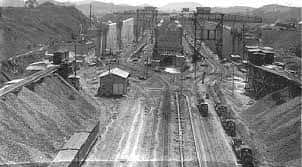
The world was forever transformed when, on May 4, 1904, the United States launched what would become one of history's most ambitious, costly, and technically challenging engineering endeavors.
It's worth remembering that when Columbus first stumbled upon America as the first European to discover it, he hadn't been looking for a new continent at all. His goal was to chart a shorter, more lucrative trade route by sailing westward from Western Europe to India. (People of that era, it turns out, believed the world was somewhat smaller than it really is.) Once Columbus revealed that this massive landmass extended nearly from pole to pole, forming a barrier between the Atlantic and Pacific Oceans, a natural question arose: could someone simply dig a channel through it?
The alternative was far from appealing — without such a canal, vessels were forced to navigate all the way south around the Southern tip of South America, an arduous and perilous voyage. As early as 1529, King Charles V of Spain commissioned plans for a canal through Panama, where the Americas are at their narrowest. Those plans, however, never materialized. Centuries later, in 1882, the French took their own crack at the project and actually broke ground. But they badly misjudged both the difficulty and the expense involved, ultimately abandoning the effort in 1899. Five years later, in 1904, the U.S. stepped in to pick up where they had left off.
Rather than diving straight into excavation, the Americans first focused on upgrading living and working conditions for the laborers on site, which dramatically lowered mortality rates and boosted morale among the workforce. With that foundation in place, they tackled the monumental task of slicing the American landmass in two, enabling ships to pass directly through rather than journeying all the way around the continent. The joint U.S. and Panamanian team completed the canal in roughly ten years, and it officially opened for business on August 15, 1914.