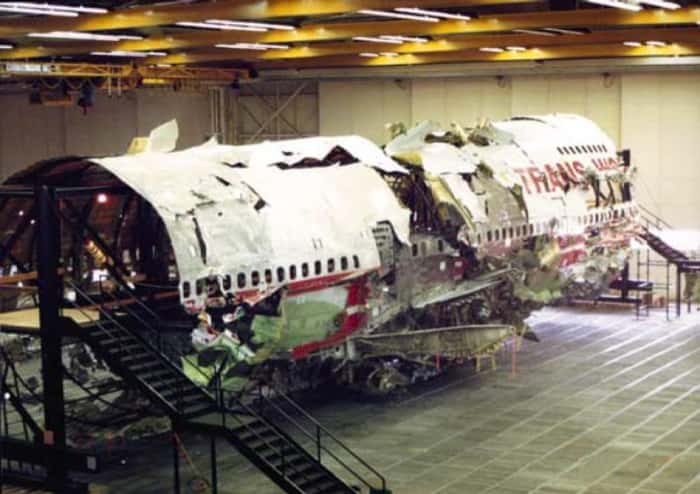
On the evening of July 17th, 1996, disaster struck when Trans World Atlantic Flight 800 broke apart in a catastrophic mid-air explosion. Every single one of the 230 people on board perished, making it one of the most devastating aviation accidents ever recorded. Investigators at the National Transportation Board initially turned their attention toward possible foul play, but even after six months of painstaking investigations, those suspicions were never confirmed.
The statistical likelihood of a plane crash stands at just 0.000001%, yet TWA Flight 800 plunged into the Atlantic Ocean mere minutes after leaving the ground, sending shockwaves across the entire nation. Below are some key details surrounding this heartbreaking disaster.
- On July 7, 1996, Trans World Airlines Flight 800 departed from John F. Kennedy International Airport, bound ultimately for Rome, where it was scheduled to touch down at Leonardo da Vinci Airport.
- The aircraft that met its fate in the Atlantic Ocean was a Boeing 747-100 model operated by Trans World Airlines.
- The crash occurred at approximately 8:31 pm EDT, near East Moriches in New York — a mere 12 minutes after the plane had lifted off the runway.
- All 230 souls aboard the passenger plane were lost, with not a single survivor recovered.
- Of the 230 people who were on the flight, 18 served as crew members, while the remaining 212 were passengers.
- Before reaching its final destination, the flight had one scheduled layover at Paris Charles de Gaulle Airport in Paris, France.
- The Boeing 747-131 had rolled off the manufacturing line in July of 1971 and had logged an impressive 16,869 flights by July 17, 1996. Its propulsion came from four powerful Pratt & Whitney JT9D-7AH turbofan engines.
- After an exhaustive four-year investigation, authorities concluded that the explosion was probably triggered by flammable fuel vapors that had leaked in the center fuel tank, which subsequently ignited.