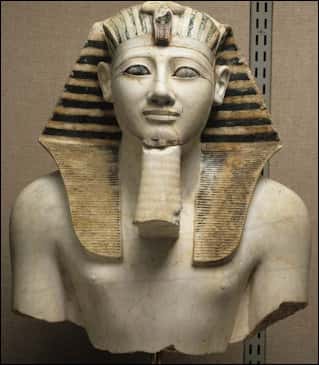
When Thutmose III took the Egyptian throne on April 24, 1479 BCE, you might expect he wielded its power — but you'd be wrong. The real authority landed squarely in the hands of his stepmother Hatshepsut, thanks to a tangled bit of political intrigue stretching back to the reign of his father, Thutmose II.
Here's the backstory: Thutmose II died without producing a son through his royal queen wife — the kind of heir that would have made succession straightforward. He did, however, father a son with one of his concubines. Under normal circumstances, a pharaoh's son would stand first in the line of succession, but being born to a concubine diminished the boy's royal standing considerably. Meanwhile, Hatshepsut possessed a powerful claim of her own — she had been Thutmose II's primary wife, his royal queen. What ultimately sealed the unusual arrangement between them was a simple reality: Thutmose III, regardless of whether his claim was stronger, was far too young to govern on his own.
The solution? Both the boy and his stepmother were named co-regents, theoretically sharing equal rank and authority. Reality told a different story, though — Hatshepsut wielded virtually all the power while Thutmose III served as co-pharaoh in title alone. She became only the second historically confirmed female pharaoh, following Sobekneferu. Under her leadership, Egypt enjoyed a period of considerable prosperity.
Over time, as Thutmose III matured, Hatshepsut gradually delegated greater responsibilities to him — including command of her armies. Still, genuine power eluded him until after her death. How did he feel about those long years in her shadow? His sentiments were possibly revealed through what happened next: during his reign, her monuments were systematically defaced and nearly every record of her existence was wiped away.