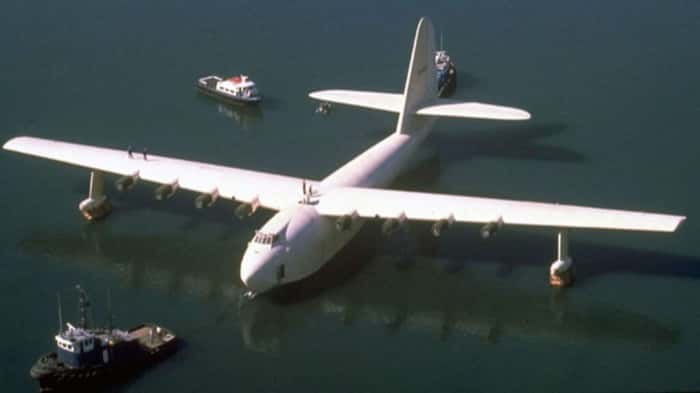
On November 2, 1937, the Hughes H-4 Hercules — better known by its famous nickname, the Spruce Goose — lifted off the water and into aviation history. The brainchild of Howard Hughes, a legendary pilot, engineer, and business magnate, it held the distinction of being the largest aircraft ever constructed at that point. Its wingspan stretched nearly the length of a football field, and its frame was laminated with birch and spruce. The price tag? A staggering $23 million, which in today's dollars would exceed $200 million.
For all its grandeur, though, the Spruce Goose would only ever leave the water a single time. Howard Hughes, intent on demonstrating that his prototype could actually fly, brought the enormous aircraft to Long Beach Harbor, California on November 2, 1937 for what would turn out to be both its inaugural and final test flight. As thousands of spectators gathered along the shore, Hughes taxied the giant flying boat across the water — then stunned the crowd by coaxing it 70 feet into the air. After traveling one mile, the test was complete, and the amazed onlookers went home.
So why did the H-4 Hercules never take to the skies again? It wasn't because anything went wrong during the flight. Rather, widespread skepticism about whether the plane's wooden construction could handle the stresses of the long-range missions it had originally been designed for kept it grounded. Reinforcing the airframe would have been a relatively straightforward solution, but Howard Hughes ultimately chose not to pursue it. His reasoning remained unclear, though some have speculated that the decision was rooted in his well-known eccentricity.
Even though the Spruce Goose never entered full production, Howard Hughes clearly treasured it. He maintained the aircraft in a climate-controlled hanger for the remainder of his life. The plane's story doesn't end there, however — today, visitors can see the Spruce Goose on display at the Evergreen Aviation Museum in McMinnville, Oregon, where it continues to captivate aviation enthusiasts from around the world.