On July 30, 1619, something remarkable happened in the American colonies: the Virginia House of Burgesses came into existence, marking the birth of the first democratically elected legislative body on American soil.
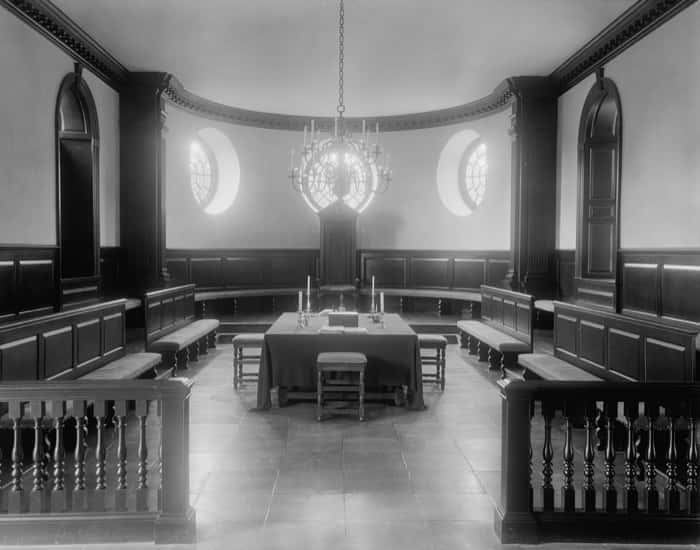
The gathering took place at the new timber church on Jamestown Island, Virginia, where Governor Sir George Yeardley called the assembly to order. The body consisted of 22 members — two Burgesses (representatives) chosen by voters from each of Virginia's eleven settlements. Rounding out the group were Governor Yeardley's six-man council, the colony's secretary and treasurer, and John Pory, who served as the speaker.
Among its ranks over the years, the House of Burgesses counted future leaders like George Washington and Thomas Jefferson as notable members.
The seeds for this legislative experiment were planted in 1618, when the Virginia Company of London issued what became known as the Great Charter. Authored by Sir Thomas Smythe and Sir Edwin Sandys, the document dismantled the military government that had been running things and replaced it with an entirely new framework.
Under this redesigned system, a governor appointed by the King would lead alongside an advisory body called the Council of State. Crucially, the charter empowered the governor to convene a General Assembly with the authority to craft laws — granting colonists a meaningful degree of self-governance even as the Virginia Company maintained overall control of the territory.
Over the course of their six-day session, assembly members got down to business, enacting laws that covered a range of issues: qualifications for serving as a Burgess, regulation of the tobacco trade, gambling, and matters of religion. They went further still, establishing the Church of England as the official church and safeguarding colonists' land rights.
Was the House of Burgesses a flawless institution? Hardly — voting for Burgesses was restricted to white men who owned property. Yet its significance cannot be overstated. It served as the springboard for the American Revolution and demonstrated that the people of Virginia could have a genuine voice in how legislative affairs were conducted.