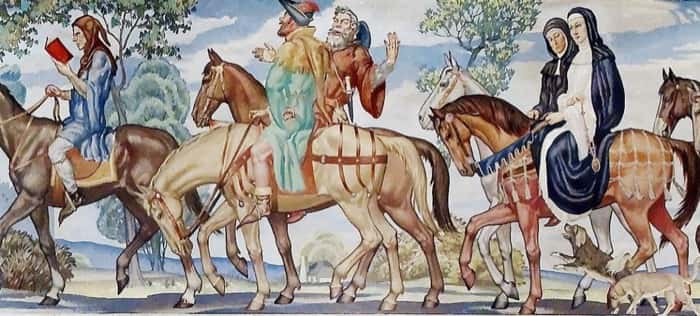
On April 17, 1387, a colorful band of fictional travelers set out on their journey in Geoffrey Chaucer's beloved work, "The Canterbury Tales." This landmark collection, penned in Middle English, brings together twenty-four stories — most of them composed in verse — following a group of pilgrims making their way from London to the city of Canterbury.
The pilgrims' destination? The renowned Saint Thomas Becket shrine at Canterbury Cathedral. Along the route, they pass the time by participating in a storytelling contest, with each tale narrated from the perspective of a different pilgrim. The stakes are simple but enticing: whoever tells the best story earns a free meal at The Tabard, an inn situated in Southwark in Central London, to be enjoyed once the group makes it back.
Geoffrey Chaucer, born in London, England, in the 1340s, went on to become one of the most celebrated figures in literary history — a poet, writer, and civil servant who would eventually earn the title "father of English literature." Of all his writings, "The Canterbury Tales" is widely regarded as his magnum opus or masterpiece. Yet Chaucer's talents extended well beyond storytelling; he also distinguished himself as a philosopher, astronomer, and diplomat. Today, he lies at rest in Westminster Abbey, London, in the hallowed area known as the Poets' Corner.