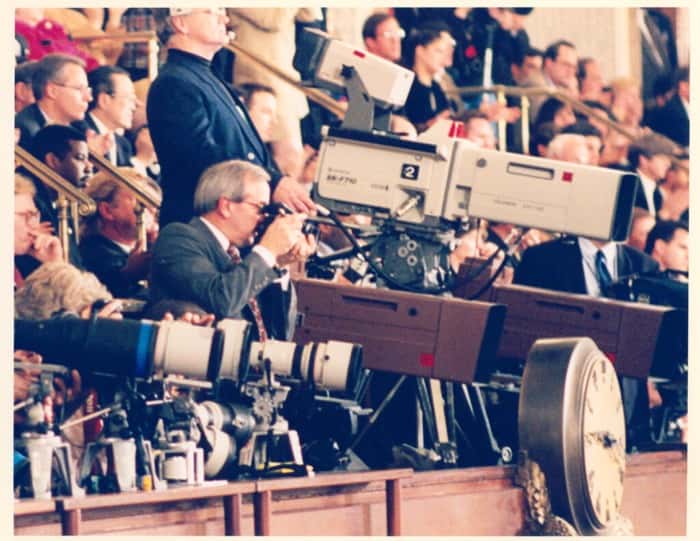
On April 22, 1954, Senator McCarthy launched his much-anticipated Senate hearings targeting the U.S. Army — and the cameras were rolling. Far from delivering the damning evidence McCarthy had promised of communist traitors embedded within the Army, the proceedings instead exposed him for what he was: a reckless self-promoter perfectly willing to destroy reputations and drag the Senate's dignity through the mud, all in pursuit of his own political ambitions.
McCarthy's rise to prominence had begun just four years prior, in 1950, when he burst onto the national stage with the explosive claim that over 200 known communists had infiltrated the Department of State. With the Cold War against the communist Soviet Union already stoking public fear, his allegations triggered widespread panic. He was swiftly empowered to investigate not only the Department of State but also the CIA, various other government agencies, and even Hollywood. Operating without real evidence, he hurled reckless accusations left and right, devastating countless lives — frequently by ensuring his targets were "black-balled" from future employment. Anyone who dared criticize him or stand in his political path faced the same blunt weapon: being branded a communist sympathizer.
Few would be shocked to learn that this approach earned McCarthy no shortage of enemies. By 1953, his political allies had begun to abandon him one by one, leaving him to conduct his investigations without support. Intoxicated by his own influence, he gambled that staging highly public, televised hearings into alleged communist infiltration of the Army would help him reclaim his fading power. The bet backfired spectacularly.
What followed were weeks of proceedings that devolved into an absolute spectacle. Then came the moment that would define the era. The Army's chief counsel Joseph Welch, responding to yet another of McCarthy's vicious attacks, delivered the line now etched into American memory: "Until this moment, Senator, I think I have never really gauged your cruelty or your recklessness. Have you no sense of decency, sir, at long last?" Applause erupted from the audience. It was over. McCarthy's credibility and power lay in ruins. Three years later, he was dead from alcoholism.