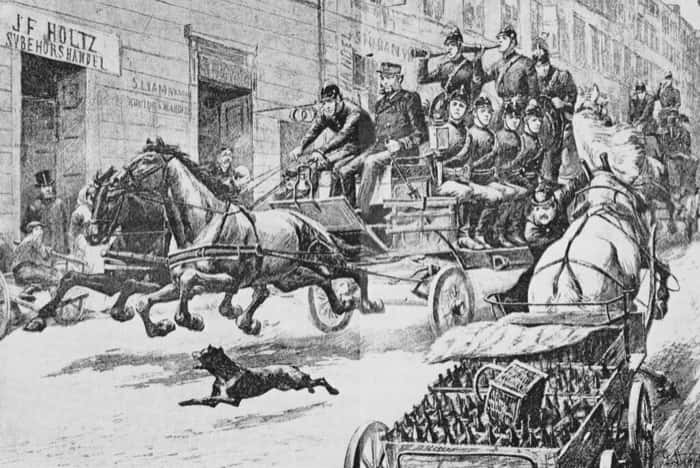
It's difficult to fathom how a single catastrophic blaze can utterly transform the physical character of an entire city — yet that's precisely what unfolded in Stockholm. At the time, the city lacked any form of housing planning designed to contain and prevent fire from spreading unchecked. Known as the Klara fire, this devastating firestorm stands as the worst in Stockholm's history, forever altering the city's landscape. When the flames finally subsided, more than 1000 homes had been turned to ash, leaving behind a staggering path of destruction that could not be overlooked.
Below are some additional details surrounding the Stockholm fire of July 31, 1751:
- A range of legally mandated warning systems existed to notify residents of fire. Church bells would ring out, and signals were raised from the watchtower on Brunk Hill. Beyond these measures, cannons were fired to wake the sleeping population — a striking reflection of how seriously the city took its disaster preparedness and emergency response.
- The blaze ignited on July 31, 1751, in the district of Norrmalm. It rapidly intensified, escalating into a violent and uncontrollable firestorm.
- During the eighth century, it was common practice to name fires after the churches they consumed. The Klara fire received its name accordingly, drawn from the Klara church.
- While countless homes sustained devastating and immeasurable damage, the residence of geologist Daniel Tilas was of particular note — it housed a remarkable collection representing over 20 years of his life's work.
- Suspicion lingered that the Klara fire had not been accidental but rather the deliberate act of an arsonist.
- A large number of Stockholm's homes carried insurance, yet the sheer scale of the disaster overwhelmed the insurer. The collective value of the destroyed property proved far too great to compensate on a household-by-household basis, with total losses estimated at 784,000 dollars.