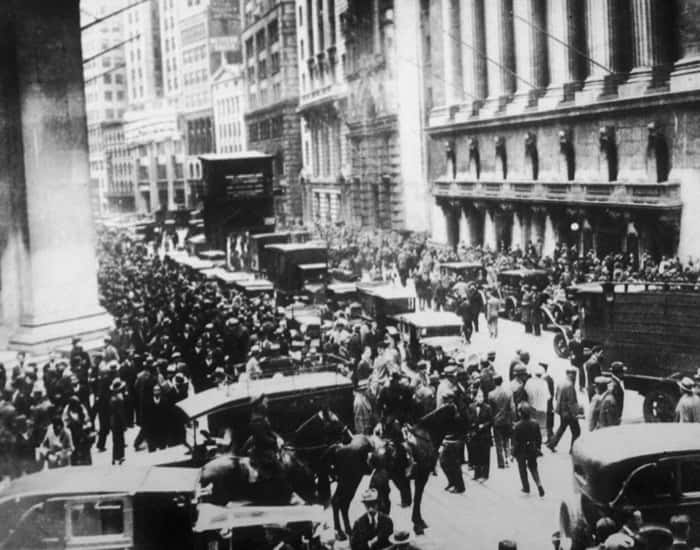
The impact of October 29, 1929 — infamously known as Black Tuesday — rippled outward with devastating force, plunging the United States and the rest of the world into an economic depression that would last a full decade, reshape the course of history, and inflict immense hardship on millions.
A Weakening Economy in a Precarious Position
In the aftermath of the First World War, optimism was everywhere. The 1920s became a byword for extravagance, as people reveled in what felt like the dawn of a brighter era and drove stock prices to unprecedented heights. Beneath the surface, though, the economy stood on far shakier ground than anyone realized.
War-era federal spending during World War I had ballooned the national debt, and that growing burden was raising alarms. Meanwhile, as Europe slowly rebuilt from the devastation of conflict, demand for American agricultural products dried up, sending prices for those goods into decline. On top of all this, consumers had stretched themselves thin with mounting debt, losing their ability to keep buying homes and other goods at previous rates — a trend that eroded values and left the stock market increasingly vulnerable.
How Black Tuesday Became the Tipping Point
A string of successive drops in the stock market built toward a breaking point, finally culminating in the catastrophic crash of October 29. With prices in free fall, panic gripped investors who rushed to unload their shares and escape the market entirely. Making matters worse, the ticker-tape machines that reported current prices were overwhelmed by the sheer volume of trading activity, leaving investors completely in the dark about where the market actually stood. That uncertainty only fueled more frantic selling, and prices spiraled downward to historic lows.
The devastation wrought on the stock market shattered public confidence in the nation's economy. In the months that followed, conditions deteriorated further as bank runs, droughts, and accelerating economic collapse swept across the country and beyond, ushering in years of hardship.