Great Britain took its first major step toward monetary modernization on April 23, 1968, when the 5 new pence and 10 new pence coins were introduced as replacements for the shilling and the florin. The whole idea was to ease the country away from its centuries-old currency structure and toward the cleaner decimal system still in use today. By getting these coins into people's hands a few years ahead of the official changeover scheduled for 1971, the British government was betting that a gradual transition would help the public adjust little by little.
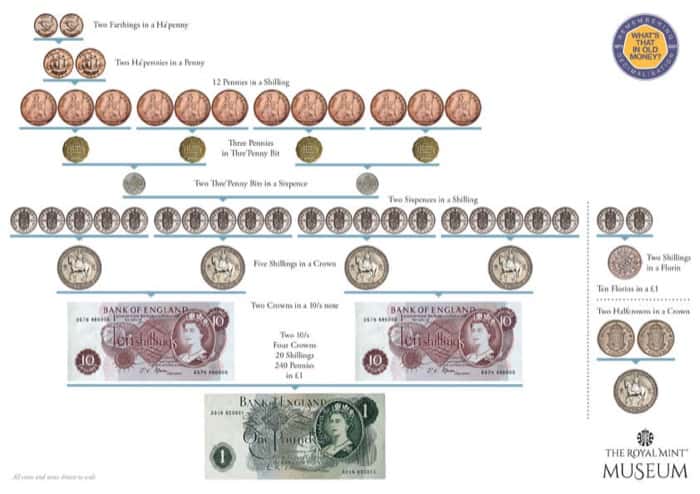
Britain's old monetary framework was anything but straightforward. At its base sat the pence — the smallest denomination. You needed twelve pence to equal a shilling, the next step up. Two shillings combined into a florin, and it took ten florins to make a pound. For a long time, many in Britain had pushed to scrap this cumbersome arrangement in favor of something more logical. The decimal solution was elegantly simple: just pence and pounds, with 100 "new pence" making up a single pound.
Of course, this created an awkward situation — for a period, two entirely different denominations both called "pence" existed side by side, each with a different value. The confusion was widespread. A common misconception held that a 5 new pence coin was worth the same as 5 old pence, when in reality it was equivalent to 12 old pence. This mix-up led plenty of shop owners to flat-out refuse the new coins altogether. Eventually, however, familiarity won out. People came to understand the decimal system, and the old coins were gradually pulled from circulation for good.