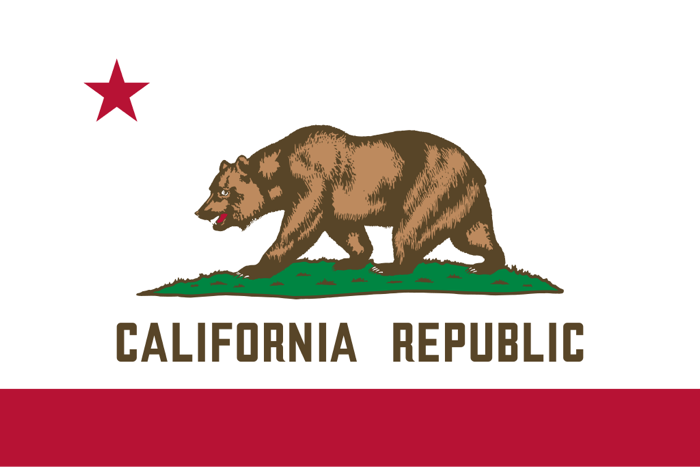
During the middle of the 1800s, the United States—still a fairly young nation—found its leadership increasingly consumed by ambitions of expansion and territorial growth. At the heart of this drive lay Manifest Destiny, a powerful conviction that divine purpose guided the country's push westward. Though this era brought no shortage of warfare and strife, it ultimately led to a landmark moment: on August 9, 1850, California, now recognized as one of the largest states in the United States, earned its place as the 31st state admitted to the Union.
The Mexican-American War
A sweeping territorial dispute between Mexico and the United States set the stage for the Mexican-American War. When the United States officially annexed the state of Texas in 1845, Mexico still refused to acknowledge Texas's independence, and the two countries clashed over where the border between Mexico and Texas actually fell. This escalating tension reached a breaking point when United States President Andrew Polk officially declared war on Mexico on May 13, 1846.
Many historians view the Mexican-American War as deeply controversial, with a widespread belief that it amounted to an American attack on a definitively weaker opponent driven purely by a hunger for land. Lasting just over a year, the conflict saw the United States volunteer army secure several key battles quickly. In the final agreement that ended hostilities, Mexico ceded a significant amount of its northern territories to the U.S., including the land that would eventually become the states of California, New Mexico, and Nevada.
The California Gold Rush
Gold flakes glinting along the American River—that's what James Marshall stumbled upon on January 24, 1848, while working on a construction project. Word of the find traveled fast, and before long, a massive influx of people descended on the San Francisco area, all chasing the promise of gold. This extraordinary migration earned its own name in the history books: the California Gold Rush.
The flood of newcomers to California brought a unique set of challenges for the region. People from diverse backgrounds poured onto the West Coast, each scrambling to establish homes as they pursued wealth. What had been a sparsely settled area underwent rapid growth, evolving into a bustling metropolis almost overnight. With this immense population surge came an urgent need for civil government and regulations, and the residents began pressing for statehood.
The Path to Statehood
Because California's population had swelled so dramatically, the state managed to skip the typical territorial stage and move toward admission to the Union at an accelerated pace. The vehicle for this historic entry was a piece of legislation known as the Compromise of 1850, which sought to resolve the thorny question of slavery across the newly acquired Mexican territories. Through this compromise, California was officially admitted as the 31st state of the United States and declared a free state on September 9, 1850.