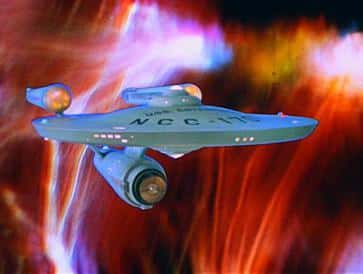
On September 8, 1966, something unlike anything before hit American television screens when NBC aired the debut of Star Trek. The show's original run would span just three seasons, yet it was destined to evolve into one of entertainment history's most influential and enduring franchises.
A Bold New Vision
Star Trek sprang from the imagination of writer and producer Gene Roddenberry, who famously described his concept as a "Wagon Train to the Stars"—essentially a space western built around self-contained adventures into uncharted territory. At the heart of the series was the starship USS Enterprise (NCC-1701), captained by James T. Kirk (William Shatner), with First Officer Spock (Leonard Nimoy) and Chief Medical Officer Dr. Leonard "Bones" McCoy (DeForest Kelley) rounding out the central trio.
That now-legendary opening monologue laid out the show's purpose with stirring clarity: "to explore strange new worlds, to seek out new life and new civilizations, to go where no one has gone before boldly." More than just a mission statement, these words captured the optimistic spirit of the 1960s space race while hinting at the series' deeper ambitions as a vehicle for social commentary.
Breaking Television Barriers
What made Star Trek truly groundbreaking was its casting and willingness to confront difficult subjects. American television had rarely seen a multiracial ensemble like this one, which included Nichelle Nichols as Lieutenant Nyota Uhura, George Takei as Lieutenant Sulu, and eventually Walter Koenig as Pavel Chekov. The show made headlines again in 1968 when Nichols and Shatner shared one of TV's first interracial kisses—a moment that drew both acclaim and fierce backlash.
Science fiction gave Roddenberry a clever tool for slipping past television censors. Transplanting contemporary conflicts to distant planets allowed the writers to explore weighty themes like war, racism, gender roles, and human rights, all wrapped in the packaging of futuristic adventure. Many episodes served as thinly veiled reflections on the Vietnam War, civil rights struggles, and Cold War anxieties, lending Star Trek a richness that was rare for primetime fare.
Initial Struggles
For all its creative ambition, Star Trek never quite won the ratings battle. The first regular episode to air, The Man Trap, debuted on September 8, 1966, as part of NBC's fall preview. Critical reception landed somewhere in the middle—some reviewers celebrated the show's inventiveness, while others found it bewildering or overly complex. Viewership continued to slide over the course of its run, and after 79 episodes, NBC pulled the plug in 1969.
But cancellation turned out to be far from a death sentence. Throughout the 1970s, syndicated reruns cultivated a fiercely devoted fan base that transformed the show into a genuine cult classic. Fan conventions sprang up, fanzines circulated widely, and the show's dedicated followers earned their own unmistakable identity: Trekkies.
A Lasting Legacy
What began as a modest television experiment has since blossomed into one of the most successful media franchises of all time.