For more than a hundred years, football on crisp fall afternoons has held a special place in the hearts of Americans. Among all the positions on the field, the quarterback stands out as one of the most captivating. Tasked with receiving play calls, orchestrating the offense, and moving the ball downfield, the quarterback is the engine of the team. Whether handing the ball to a nimble running back, weaving through defenders on a scramble, or launching a pass to a waiting receiver, the position is electric to watch. Yet here's something that might catch you off guard: there was a time when throwing the ball forward was completely illegal. That all changed on September 5, 1906, when a St. Louis University quarterback forever transformed American football by completing the first legal forward pass during a game.
History of American Football
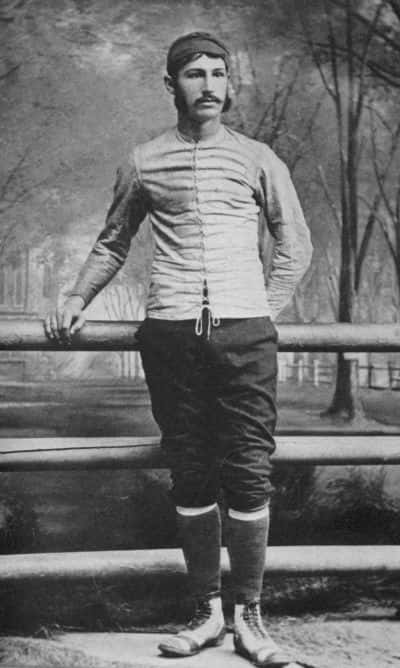
The roots of American football stretch back to late 1869, though the sport looked almost nothing like what fills stadiums today. There was no forward pass in those early days — the game more closely resembled rugby than anything else. Advancing the ball relied heavily on the quarterback handing it off to a running back. Teams also frequently used what was called a "mass play," a formation in which players banded together to bulldoze a path for the ball carrier to charge through.
The consequences of this physical style of play were severe, producing countless injuries and even deaths. Mass plays were built on raw power and group momentum, and players wore far less protective equipment than what is standard today. On top of that, play calling involved minimal strategic thinking.
Then 1906 arrived and changed everything.
The Forward-Passing Game
Early in 1906, Georgia Tech football coach John Heisman started championing an innovative concept: the "forward pass." His motivation was straightforward — the sheer brutality of mass plays and the alarming rate of player injuries demanded a safer alternative. Schools across the Eastern United States largely pushed back against the idea, but it found considerable enthusiasm at other universities around the country.
Seeing enormous promise in this new play, St. Louis University coach Eddie Cochems embraced it wholeheartedly, drilling the forward pass into his team's practices until they had it down to a science. When the 1906 season kicked off, St. Louis University quarterback Bradbury Robinson made history by completing the first successful forward pass, turning it into a 20-yard touchdown.
That season proved to be a dominant one for St. Louis University, as the team went a perfect 11-0 and outscored opponents by a staggering combined total of 401-11. The mastermind behind it all, Coach Eddie Cochems, earned the lasting nickname "Father of the Forward Pass."
Impact Today
Inspired by the remarkable success that Cochems and his squad enjoyed throughout the 1906 season, other programs began incorporating the forward pass into their own playbooks — and found success of their own. In modern American football, the forward-passing game is an indispensable element of the sport, making it far more strategic and thrilling to watch while also being significantly less violent than its earliest form.