Back in 1954, the United States Supreme Court handed down a groundbreaking ruling in Brown v. Board of Education, declaring that school segregation was unconstitutional on the grounds that it violated the Equal Protection Clause of the 14th Amendment. Yet even though this decision formally struck down segregation in educational institutions, progress was painfully slow, with numerous schools actively pushing back against integration.
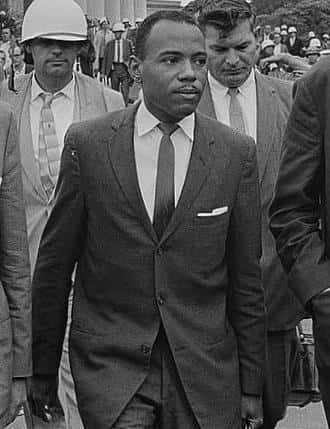
Fast forward to 1961 — seven years after the official ruling that outlawed segregation in public schools — and a young man by the name of James Meredith submitted his application to the University of Mississippi, an institution that remained exclusively white. His goal was clear: to challenge segregation laws head-on and claim his constitutional right to attend a public university. Initially, the school accepted his application, but once administrators learned he was black, they reversed course and rejected him. After enduring a year-long legal fight, James Meredith made history on September 30, 1962, when he arrived on campus with United States Marshals at his side and officially became the first black student to enroll at the University of Mississippi.
A Violent Response
What followed James Meredith's appearance on campus was nothing short of explosive. As he stood in line to register for classes, hundreds of armed civilians descended on the area, determined to intimidate him and preserve their school's segregation. The tension boiled over into a full-blown riot by 7 p.m. that evening. The mob swelled to more than 2500 people, hurling bottles and rocks, setting cars ablaze, looting, and screaming obscenities. Marshals responded by firing tear gas into the crowd in an attempt to regain control. The chaos left hundreds injured and claimed two lives before it was over.
Military Intervention
The crisis at the University of Mississippi demanded a response from the highest levels of government. President John F. Kennedy stepped in and signed an executive order authorizing the use of federal resources to stop the unlawful obstruction of James Meredith's enrollment at the University of Mississippi. He mobilized a massive force — the U.S. Border Patrol, Army Military Police, and members of the U.S. Army — sending nearly 30,000 soldiers to the scene. This overwhelming show of federal power succeeded in crushing the violent uprising and ensuring that James Meredith could complete his enrollment. Beyond that, federal troops and marshals were tasked with escorting Meredith to every class and providing him with round-the-clock protection all the way through his graduation.
Lasting Impact
The enrollment of James Meredith at the University of Mississippi stands as a landmark triumph for the Civil Rights Movement and the broader struggle against segregation. His admission broke a profound barrier — it was the first time an African American had been able to enroll in and attend a previously all-white university. Through his perseverance and courage, Meredith became a powerful symbol for everyone fighting against white supremacy.
Beyond the personal victory, the Ole Miss riot made one thing abundantly clear: the federal government needed to step in more aggressively to enforce civil rights. At the same time, the government's response demonstrated a genuine commitment to safeguarding those rights.