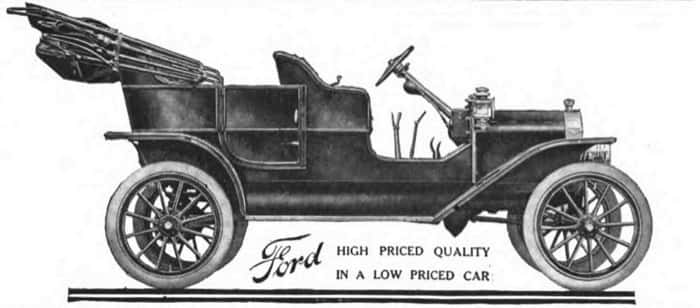
The date September 27, 1908, stands as a turning point in how people get around. That was the day the very first Ford Model T emerged from the Detroit factory — a car destined to transform the entire automotive world. What made it so revolutionary? Henry Ford had a bold vision: automobiles shouldn't be reserved for the elite. With the Model T, car ownership suddenly became something ordinary people could actually imagine.
Fun Facts:
- On September 27, 1908, the inaugural Ford Model T rolled off the line at the Piquette Avenue Plant in Detroit, Michigan.
- Affectionately called "Tin Lizzie," the Model T became a pioneer of mass production after Henry Ford refined the assembly line process in 1913, turning it into one of the earliest cars built at such enormous scale.
- Henry Ford was driven by a clear goal — putting a car within reach of the average American — and millions embraced that promise. The Model T's price tag fell to a mere $260 by 1925, a dramatic drop that opened the door to car ownership for countless families. This was made possible by the company's extraordinary manufacturing methods, which kept costs low and advanced Ford's commitment to making automobiles accessible to all.
- Beyond its affordability, the Ford Model T was an impressive piece of engineering in its own right. Capable of hitting a top speed of 45 mph — no small achievement for the era — it also delivered solid fuel economy at 13-21 miles per gallon. For the everyday American, these qualities made it both a sensible and budget-friendly option.
- When production finally wrapped up in 1927, more than 15 million Model T cars had found their way to buyers.
- The ripple effects of the Model T and the assembly line extended far beyond the auto industry. Together, they spurred the expansion of roads across the country and fundamentally altered the ways Americans lived and worked — leaving a lasting imprint on the nation's culture and history.