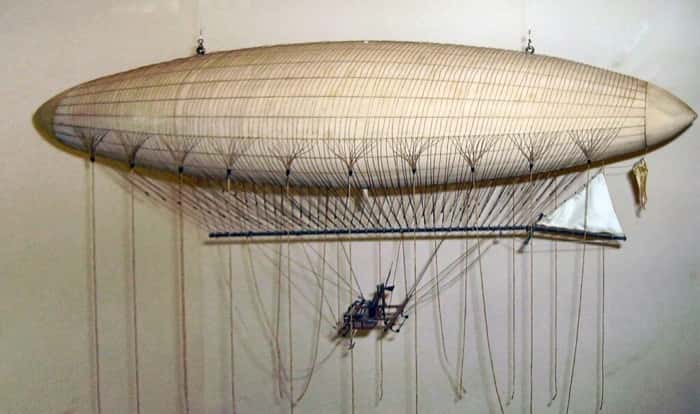
Long before the age of jets and helicopters dominating our skies, a French engineer harbored an ambitious vision: a flying machine capable of independent, directed movement through the air. His name was Henri Giffard, and on September 24, 1852, he turned that vision into reality by piloting the world's first powered, steerable airship.
This was no flight of fancy. It was an actual, functioning craft — lifted by hydrogen and driven by steam.
The Visionary Behind the Machine
Calling Henri Giffard a mere inventor doesn't do him justice. He was a visionary fueled by deep expertise in steam engineering. When he set about designing his dirigible, shattering speed records wasn't the goal. What drove him was something more fundamental: demonstrating that humans could do more than simply float upward into the heavens — they could actually navigate through them with intention.
And that's exactly what he did.
Hidden Home Expenses That Have Drained Wallets for Centuries
What Made Giffard's Airship Unique?
Every balloon flight before Giffard amounted to little more than surrendering yourself to the wind. Once you left the ground, the atmosphere decided your destination and your landing spot. Giffard refused to accept that limitation.
His airship featured:
- A 44-meter-long hydrogen-filled envelope, tapered at both ends for better aerodynamics.
- A triangular rudder for steering is basic, but effective.
- A steam engine mounted on a platform beneath the balloon. It produced three horsepower, just enough to move the airship at around 9 kilometers per hour.
To manage the risk of fire (a genuine concern with hot engines and flammable hydrogen), Giffard:
- Redirected the engine's exhaust down a long pipe, away from the balloon.
- Wrapped the boiler's stoke hole in wire gauze to prevent sparks.
It was a precarious balancing act — keeping flame and flammable gas in close quarters without catastrophe.
Lessons From History: Home Expenses That Never Pay Off
The Flight That Made History
That morning of September 24, 1852, Giffard lifted off from the hippodrome at Place de l'Étoile in Paris, setting course for Élancourt, a destination roughly 27 kilometers distant.
The entire voyage lasted about three hours.
So what elevated this journey to a landmark moment?
- He steered. He changed direction mid-flight.
- He proved control was possible.
Reaching Élancourt was only part of the achievement. The real breakthrough was flying with deliberate intent and direction — something no one had ever accomplished before.
A One-Way Ticket
The engine powering Giffard's craft lacked the muscle to battle the wind on a return trip, making this a one-way journey. Yet that single flight carried an unmistakable declaration to the entire world:
Controlled, powered flight wasn't just possible; it had arrived.