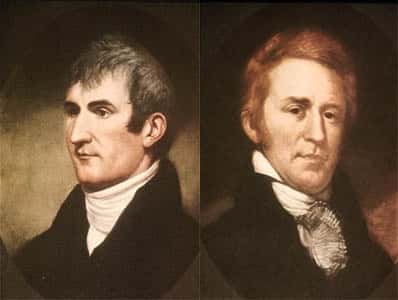
Back in 1803, the fledgling United States struck a monumental deal with France, snapping up more than 800,000 square miles of land west of the Mississippi River. Overnight, the nation nearly doubled in size — yet vast stretches of this new territory remained completely unknown. President Thomas Jefferson tapped Meriwether Lewis, who served as both a military officer and his private secretary, to chart these unexplored lands and seek out a passage to the Pacific Ocean. Lewis brought aboard his friend William Clark, and the two set off on an epic 2½-year journey of exploration before finally arriving home on September 23, 1806.
The Corps of Discovery
President Jefferson's venture with Lewis and Clark carried an official title: the Corps of Discovery. Far from a simple scouting trip, it represented the army's first formal diplomatic mission and pursued multiple goals. Jefferson wanted the newly acquired territory thoroughly explored and mapped. Beyond that, he sought a navigable water route stretching all the way to the Pacific Ocean, along with the collection of valuable scientific and cultural knowledge.
A crew of 33 individuals made up the Corps of Discovery — among them soldiers, hunters, and interpreters. One particularly invaluable member was Sacagawea, a Shoshone woman whose contributions proved essential. She translated for the Corps during encounters with Native tribes and was instrumental in building trust between the expedition and the Indigenous peoples they met along the way.
Accomplishments
The expedition led by Lewis and Clark proved to be a resounding success. Covering more than 8,000 miles round trip between St. Louis, Missouri, and the Pacific Ocean, the Corps of Discovery produced over 140 detailed maps of the region. These maps would later help define the earliest pathways for American westward expansion. While a water route to the Pacific ultimately eluded them, they were able to present President Jefferson with a viable land route instead.
Along the way, Lewis and Clark identified and recorded more than 100 previously unknown animal species, among them the grizzly bear, prairie dog, and mountain goat. Their botanical work was equally impressive, with over 200 new plant species cataloged during the journey. Thanks in large part to Sacagawea, the Corps forged positive and peaceful connections with numerous Native tribes. They carefully documented the customs, traditions, and ways of life of the peoples they encountered throughout the expedition.
Long-Term Impact of the Expedition
What Lewis and Clark accomplished resonated deeply throughout the young nation, proving that the vast territory gained through the Louisiana Purchase could indeed be explored and understood. Their success sparked widespread curiosity about the western reaches of the country and motivated countless Americans to head west in pursuit of new places to settle. In many ways, the Corps of Discovery blazed a trail — both literally and figuratively — for American settlement of the frontier. Their expedition fed into the growing idea of Manifest Destiny, a concept that would ultimately bring a complex mix of both positive and negative consequences for the nation.