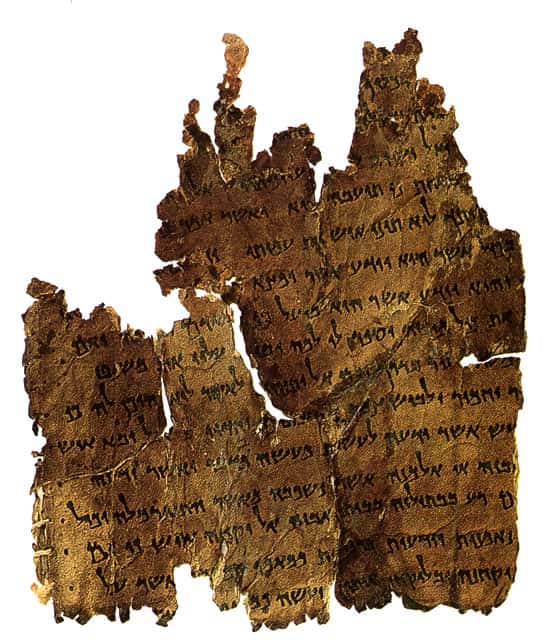
On September 22, 1991, the Huntington Library in San Marino, California, dropped a bombshell that would reshape the landscape of biblical scholarship. The institution announced it was throwing open the doors to its entire photographic archive of the Dead Sea Scrolls — a move that shattered decades of restricted access and was widely celebrated as a triumph for open research and intellectual freedom.
What Are the Dead Sea Scrolls?
Between 1947 and 1956, Bedouin shepherds stumbled upon what would become one of the most significant archaeological finds of the 20th century near Qumran, east of Jerusalem. The Dead Sea Scrolls comprise roughly 800 manuscripts penned in Hebrew and Aramaic, dating from around 200 BCE to the first century CE. Among them are books of the Hebrew Bible alongside sectarian writings that offer a remarkable window into the religious and social dynamics of that era.
Restricted Access
In the decades following their discovery, getting anywhere near the scrolls was extraordinarily difficult. A tight-knit circle of scholars — frequently dubbed a "cartel" — held exclusive authority to study, edit, and publish the manuscripts. Everyone else, from aspiring researchers to curious members of the public, was left to piece together understanding from sparse and selectively released publications. Naturally, this bred deep frustration and widespread charges of academic elitism.
Duplicate photographs did exist at several institutions, including Harvard, Oxford, and Hebrew Union College. Yet these copies remained effectively locked away, requiring sign-off from both the Israeli Antiquities Authority and the appointed editorial team before anyone could examine them.
The Huntington Library's Bold Move
Everything changed when William A. Moffett, the Huntington Library's director, declared that the institution's archive of 3,000 master photographic negatives would be made available to any qualified scholar who wished to study them. This trove encompassed both published and unpublished texts, with some photographs capturing fragments before they had suffered further deterioration over time.
The media reaction was explosive. Commentators likened Moffett's decision to "breaking down the Berlin Wall" for biblical scholarship. The story landed on the front pages of The New York Times and Los Angeles Times, accompanied by widespread praise characterizing the move as both progressive and long overdue.
Controversy and Praise
Predictably, members of the original editorial team were incensed. They contended that the Huntington Library's decision violated agreements established with Israeli authorities in the 1980s and maintained that scholars who had spent years painstakingly deciphering the scrolls deserved to retain first publication rights.
Yet the chorus of support far outweighed the objections. Lawrence Schiffman of New York University drew a colorful analogy, likening the initiative to "Robin Hood" scholarship — wresting knowledge from the academically privileged and delivering it to those eager to learn. For the first time, graduate students and independent researchers gained the ability to examine the scrolls directly, free from the nagging worry of being undercut by unseen, unpublished material.