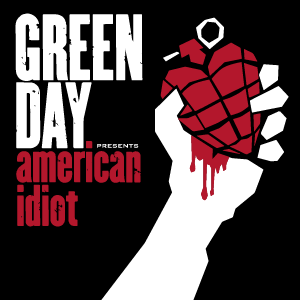
On September 21, 2004, Green Day dropped American Idiot, an album that would reshape their legacy and reignite their place in rock music. Their seventh studio effort was far more than a collection of songs—it was a daring political statement wrapped in a concept album framework, delivering the kind of career-reviving moment that bands dream about.
Reinvention After Setback
Green Day were at a crossroads as the early 2000s unfolded. Warning (2000), their previous record, had underperformed expectations, and internal friction was mounting. To make matters worse, the master tapes for a planned follow-up called Cigarettes and Valentines were stolen, leaving the band with no choice but to go back to square one. Rather than retreat, though, Billie Joe Armstrong, Mike Dirnt, and Tré Cool turned that frustration into fuel. What emerged was something nobody saw coming: a sprawling, theatrical "punk rock opera" that married raw punk intensity with cinematic ambition.
The Punk Rock Opera
At the heart of American Idiot lies the "Jesus of Suburbia," a restless anti-hero who turns his back on suburban conformity and goes searching for purpose in a fractured America. Through characters like St. Jimmy and Whatsername, the narrative weaves across tracks that defy easy categorization—part standalone singles, part multi-movement suites, including the nine-minute odyssey "Jesus of Suburbia." Alienation, media manipulation, war, and youthful defiance all pulse through the album, capturing the unease of a generation shaped by 9/11 and the Iraq War.
It's worth noting that only a handful of tracks—"American Idiot" and "Holiday" being the most prominent—took an explicitly political stance. Yet the album's deeper message was a sweeping indictment of cultural division and widespread disillusionment. Armstrong described the record as something designed to capture its moment in time while also standing as a lasting expression of confusion and dissent.
Critical and Commercial Triumph
The risk Green Day took was rewarded spectacularly. American Idiot landed at number one on the Billboard 200—a first for the band—and climbed to the top of charts in 18 other countries. With worldwide sales surpassing 23 million copies, it secured its place among the best-selling albums of the 2000s. Five singles from the record became hits:
- "American Idiot"
- "Boulevard of Broken Dreams"
- "Holiday"
- "Wake Me Up When September Ends"
- "Jesus of Suburbia"
The critical reception matched the commercial success. The album took home the Grammy for Best Rock Album in 2005 and earned a nomination for Album of the Year. Meanwhile, "Boulevard of Broken Dreams" went on to claim the Grammy for Record of the Year.
Cultural Impact
Beyond its impressive sales figures, American Idiot evolved into a genuine cultural touchstone. Rolling Stone enshrined it on their list of the "500 Greatest Albums of All Time," and in 2010, it was adapted into a Tony Award-winning Broadway musical. The album's visual identity—especially that now-legendary cover featuring a heart-shaped hand grenade—became instantly recognizable.
Perhaps just as importantly, the record breathed new life into punk rock, dragging it back into the mainstream spotlight and introducing a fresh generation to the genre's spirit of rebellion. As critic Jim DeRogatis observed, the album signaled Green Day's transformation into an "adult" pop-punk band—one that had matured without sacrificing its edge.