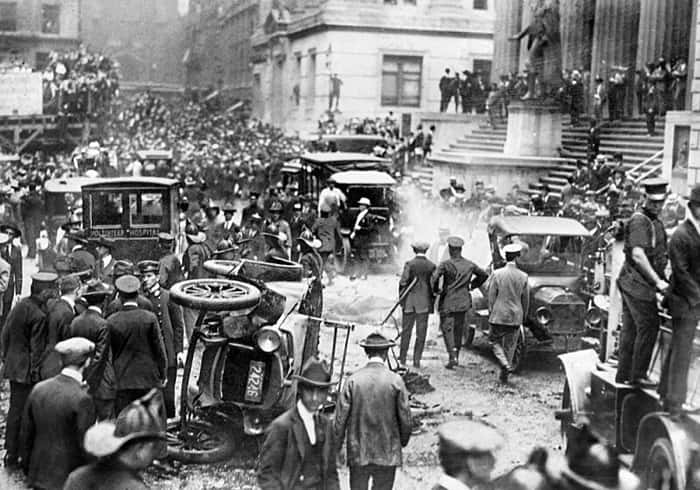
A devastating and still-mysterious crime unfolded on September 16, 1920, when a horse-drawn wagon detonated just outside a J.P. Morgan & Co. building in New York City. The blast claimed the lives of over 40 people and left more than 100 others wounded. Remarkably, no one was ever identified as being responsible, and the case has never been solved. At the time, it stood as one of the deadliest terrorist attacks ever carried out on U.S. soil.
The Bombing
The streets were packed with people heading to and from their midday meals when, around noon, a wagon rolled up and stopped at the intersection of Wall and Broad Streets. It came to rest directly in front of the J.P. Morgan & Co. building — a structure widely regarded as a symbol of American capitalism. Moments after the wagon halted, a devastating explosion tore through the area, destroying the horse and wagon in an instant. The blast was powerful enough that people across lower Manhattan reported hearing the thunderous sound.
Investigators later determined that the device had been loaded with 100 pounds of dynamite along with more than 500 pounds of cast iron weights, which served as deadly shrapnel when the bomb went off. Thirty people were killed immediately, and roughly a dozen more succumbed to their wounds in the hospital afterward. Beyond the staggering human toll, hundreds sustained injuries, and the destruction to surrounding property ran into the millions of dollars.
The Investigation
Authorities wasted no time launching a formal inquiry into the attack. Near the crime scene, members of the Bureau of Investigation found suspicious flyers that had been posted in the area — leaflets demanding the release of political prisoners and containing explicit threats of death. The language bore a striking resemblance to threats issued during an anarchist bombing campaign in 1919, which drove both the Bureau of Investigation and police to urgently search for links between the two events.
Their efforts, however, ultimately came to nothing. Despite years of dogged attempts to identify those responsible, leads dried up and the case went cold. By 1940, the investigation was officially dropped, and no one was ever brought to justice for the terrible loss of life.
The Aftermath
Fears of additional attacks in the wake of the bombing led to a significantly bolstered police presence along Wall Street and a sweeping crackdown on radical political movements, fueled by suspicions tying the attack to an anarchist group. This intensified security atmosphere sparked growing tensions and fierce debates surrounding civil liberties and political activism.
While most people today have little awareness of this event, it holds a place in American history as a recognized act of terrorism. In a striking display of resilience, Wall Street reopened to the public the very next day after the attack.