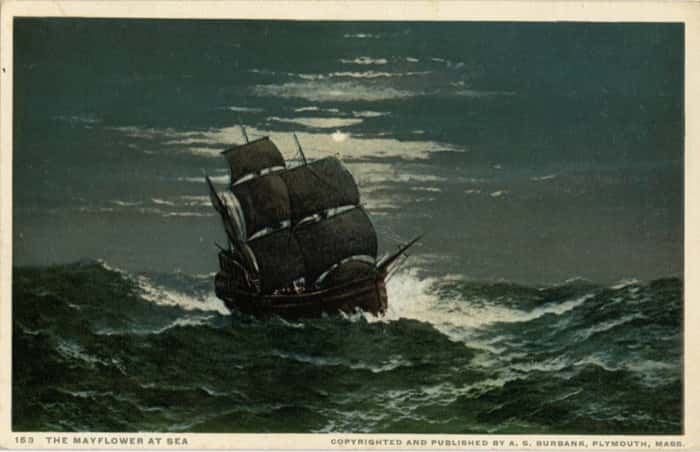
With aspirations of religious liberty and fresh economic prospects driving them forward, 102 Pilgrims departed England aboard the Mayflower on September 16, 1620, bound for America. The original plan had called for a second ship, the Speedwell, to sail alongside it. Persistent leaks, however, delayed the expedition by weeks and ultimately proved the Speedwell unfit for an ocean crossing. A portion of its passengers chose to give up on the venture entirely, while the remainder squeezed onto the already crowded Mayflower. Facing tight quarters, shrinking provisions, and the looming threat of winter storms over the Atlantic, the determination of these travelers to build a better life was unmistakable despite the overwhelming odds stacked against them.
None of this would have been possible without the money behind it. A consortium of 70 London businessmen known as the Merchant Adventurers provided the financial foundation for the entire undertaking. The Pilgrims themselves had precious little in the way of resources, and the Merchant Adventurers recognized America as a lucrative opportunity. They covered the cost of the Mayflower, its crew, and enough supplies to last a full year, all in exchange for a commitment from the Pilgrims to build a profitable colony and labor on behalf of the company for seven years to settle the debt. Colonies already thriving in the New World gave the Merchant Adventurers confidence that this arrangement represented a wise investment.
From start to finish, the Mayflower's crossing was riddled with hardship. The ship had initially set course for Northern Virginia, but relentless storms and violent seas battered the vessel, slowing progress and inflicting structural damage. Packed well beyond comfort, the passengers then faced the outbreak of a contagious disease that would ultimately claim the lives of nearly half of those on board. Winter conditions on the Atlantic forced the Mayflower off course, and it made landfall at Cape Cod, Massachusetts, on November 19, 1620, leaving the Pilgrims in a desperate predicament. With provisions already dangerously depleted and the harsh winter bearing down, they resolved to establish themselves at nearby Plymouth — creating what would become the first permanent European settlement in the New World.