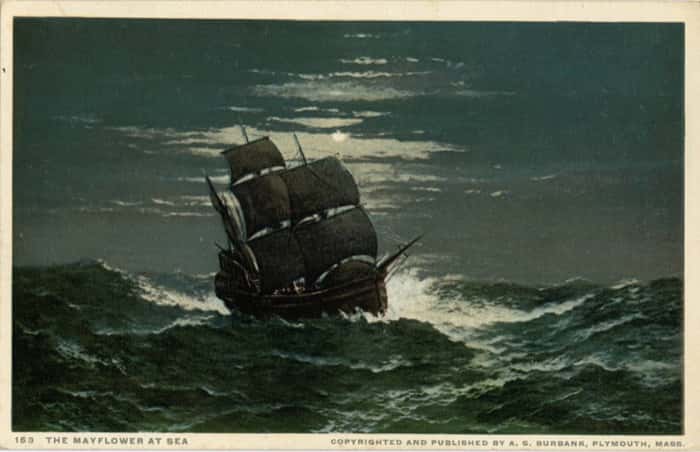
On September 16, 1620, the Mayflower departed England, embarking on what would become one of history's most consequential voyages to America. The plan had originally called for a second ship, the Speedwell, to make the crossing alongside it. That plan fell apart, however, when repeated leaks plagued the Speedwell over a period of weeks, making it abundantly clear the vessel simply couldn't handle the open ocean. Faced with this setback, some of the Speedwell's passengers gave up on the expedition entirely, while the remainder crowded aboard the Mayflower. And so, 102 Pilgrims pushed forward into the Atlantic despite tight quarters, shrinking provisions, and the looming threat of winter storms — driven by an unmistakable hope for religious freedom, economic opportunity, and the promise of a new life against extraordinary odds.
None of this would have gotten off the ground without money, and that funding came from the Merchant Adventurers — a consortium of 70 London businessmen who spotted opportunity across the ocean. The Pilgrims themselves had precious few resources to draw upon, but the Merchant Adventurers viewed the American venture as a lucrative prospect. They bankrolled the Mayflower, its crew, and an entire year's worth of supplies, striking a deal that required the Pilgrims to build a profitable colony and labor on behalf of the company for seven years to settle the debt. From the investors' perspective, the arrangement made solid financial sense, bolstered by the track record of colonies already thriving in the New World.
Getting across the Atlantic proved to be a grueling ordeal. The Mayflower had set course for Northern Virginia, but relentless storms and punishing seas battered the ship, slowing progress and inflicting real damage to the vessel. Packed beyond comfort, the passengers then faced something even worse: a contagious disease swept through the ship, ultimately killing almost half of those on board. When winter conditions on the open water forced the Mayflower to make landfall at Cape Cod, Massachusetts, on November 19, 1620, the surviving Pilgrims confronted a grim reality. With provisions already running dangerously low and winter bearing down, they chose to establish themselves at nearby Plymouth — founding what would become the first permanent European settlement in the New World.