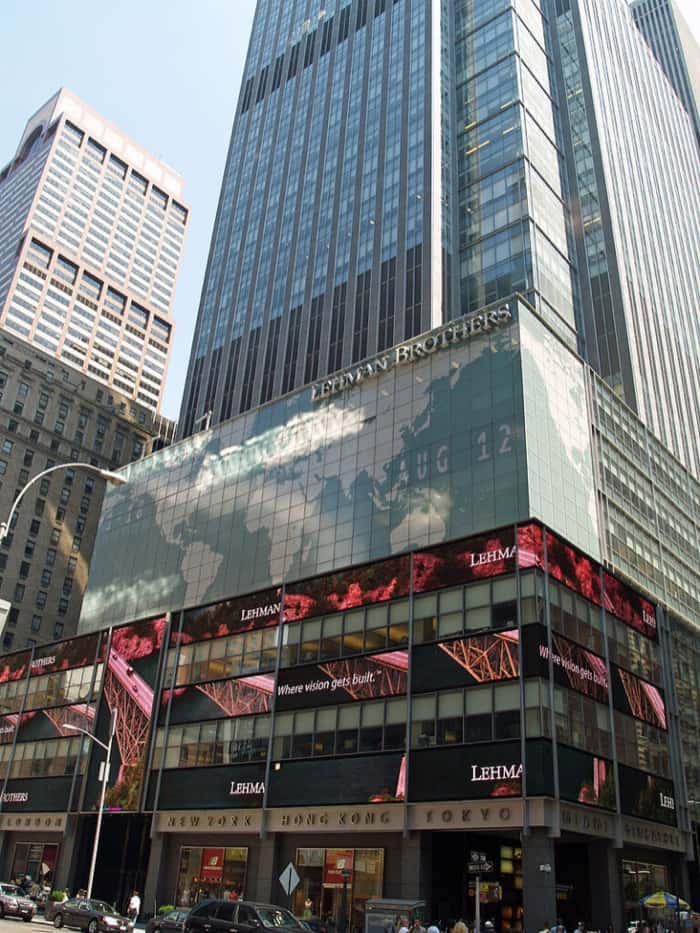
On September 15, 2008, Lehman Brothers — a titan of global finance — filed for bankruptcy, setting off what would become the most spectacular unraveling of the worldwide economic crisis. Despite surviving 158 years of wars, depressions, and volatile market cycles, the storied investment bank met its match in the collapse of the U.S. housing market. Its staggering $613 billion in debt secured its place as the largest bankruptcy filing in U.S. history.
The Road to Collapse
Lehman Brothers dove aggressively into mortgage lending during the late 1990s and early 2000s. Operating through subsidiaries like Aurora Loan Services and BNC Mortgage, the firm carved out a major presence in the subprime market, generating tens of billions of dollars in high-risk loans every month. Those loans were then bundled into mortgage-backed securities and offloaded to investors.
For a time, this approach proved enormously lucrative. But when housing prices hit their peak in 2006 and started sliding fast, a wave of mortgage defaults swept through the market. The securities sitting on Lehman's books — frequently the lower-rated tranches that other firms had passed on — turned toxic. By 2007, the company's leverage ratio had ballooned to 31:1, leaving it dangerously exposed to even modest dips in real estate values. Mounting losses steadily eroded investor confidence, and by 2008, Lehman's stock had shed nearly 80% of its value. Last-ditch attempts to find a buyer — with both Barclays and Bank of America in the picture — fell apart after regulators refused to provide any backing, leaving bankruptcy as the sole remaining path.
The Day of the Filing
On the morning of September 15, 2008, Lehman Brothers Holdings Inc. formally sought Chapter 11 protection, and global markets plunged into chaos almost instantly. The Dow Jones Industrial Average shed more than 500 points — its steepest single-day decline since the aftermath of 9/11. Credit markets seized up as money market funds and banks rushed to figure out how much exposure they carried. Within days, faith in the financial system itself appeared to teeter on the edge.
The repercussions hit without delay. Hedge funds that relied on Lehman as their prime broker found their assets locked up. Commercial real estate markets were rocked by sudden sell-offs as Lehman unwound holdings such as Archstone, a central apartment REIT. Nor was the damage confined to the US; the shockwaves rippled across borders. Banks in Japan and Hong Kong disclosed billions in losses linked to Lehman securities.
Aftermath and Reforms
The fall of Lehman laid bare deep systemic vulnerabilities: runaway leverage, inadequate regulation of investment banks, and the perils posed by opaque financial instruments. Its demise fast-tracked a series of government interventions — among them the rescue of AIG, the Troubled Asset Relief Program (TARP), and extraordinary Federal Reserve measures aimed at steadying credit markets.
A wave of far-reaching reforms followed in the ensuing years. The Dodd-Frank Act of 2010 ushered in tighter oversight, required stress tests for major banks, and established the Consumer Financial Protection Bureau to protect borrowers. Mortgage lending itself was fundamentally restructured through "qualified mortgage" rules designed to prevent a repeat of reckless lending practices.
For the thousands of Lehman employees who lost their jobs overnight, the bankruptcy shattered careers and livelihoods. For the rest of the world, it stood as a stark warning about what happens when unchecked risk runs rampant in a globalized economy.