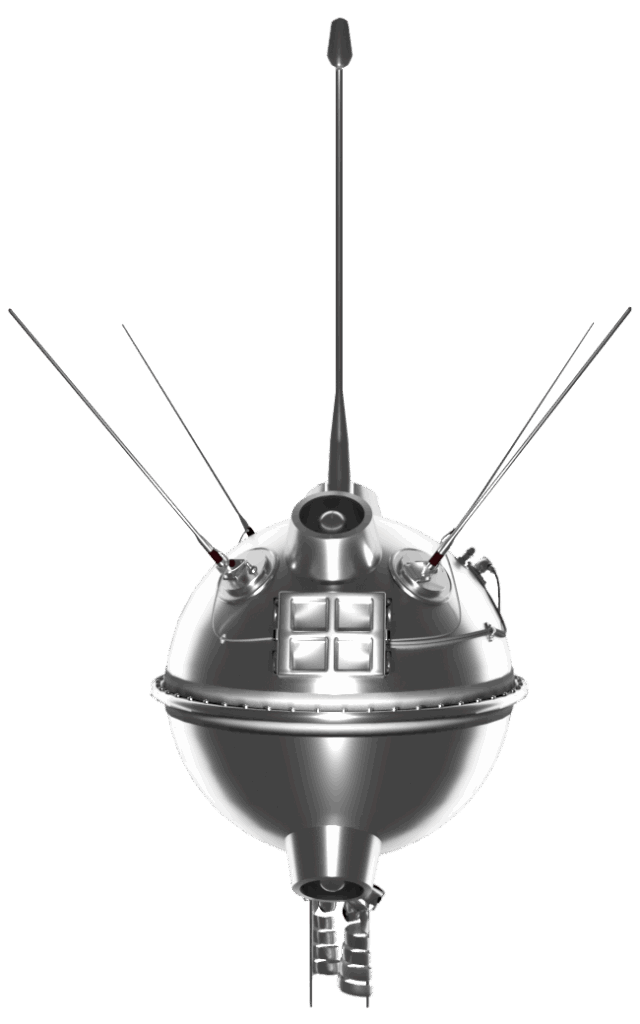
On September 14, 1959, the Soviet Union achieved a groundbreaking first: its Luna 2 probe slammed into the lunar surface, becoming the earliest human-made object ever to make contact with another celestial body. This moment represented a turning point in the intensifying space race.
The Mission
Launched on September 12, 1959, from the Baikonur Cosmodrome, Luna 2—also known as "Lunik 2"—was a spherical probe that tipped the scales at approximately 390 kilograms. It carried a suite of instruments, including antennas, magnetometers, radiation detectors, and equipment built to analyze cosmic rays and the solar wind.
What set Luna 2 apart from its predecessors was its direct flight path toward the Moon. The spacecraft exceeded 11 kilometers per second to break free of Earth's gravitational pull, and after traveling for 36 hours, it impacted the lunar surface at roughly 3 kilometers per second in a region near the craters Aristillus, Archimedes, and Autolycus.
During its journey, the probe deployed a sodium vapor cloud that created a luminous trail across the night sky—a deliberate move to make the mission observable from the ground. Observatories throughout the Soviet Union and elsewhere tracked this glowing spectacle.
Scientific Results
Before slamming into the Moon, Luna 2 carried out several noteworthy experiments. Its instruments revealed that the Moon lacks both a meaningful magnetic field and radiation belts—a stark contrast to Earth. The probe also gathered fresh measurements of the Van Allen radiation belts, deepening scientists' understanding of how solar particles interact with our planet. On top of that, its micrometeorite detectors registered only a handful of minor impacts, easing widespread fears that frequent collisions with space debris could make space travel prohibitively dangerous.
Symbolism in the Cold War
While Luna 2's scientific findings were valuable, the mission's political and symbolic weight carried even greater significance. The Soviet Union had already stunned the globe by launching Sputnik in 1957, but reaching the Moon cemented its standing as the frontrunner in space exploration.
The timing amplified its impact. The United States was grappling with a string of rocket failures, fueling anxieties about Soviet dominance in missile technology. Not long after this landmark achievement, Soviet Premier Nikita Khrushchev traveled to the U.S. on a state visit. In a pointed gesture, he gifted President Dwight Eisenhower a replica of the metallic pennants that Luna 2 had deposited across the Moon's surface—each one engraved with the USSR's name and the date of impact.
Luna 2 and Beyond
The triumph of Luna 2 showed that reaching beyond Earth was within humanity's grasp. It validated that spacecraft could be guided with enough precision to strike a moving celestial target—a capability that would prove indispensable for future missions. A mere three weeks later, Luna 3 captured and transmitted the first photographs of the Moon's far side, adding yet another achievement to the Soviet space program's growing record.