It was the early morning hours of September 1, 1985, when decades of mystery finally gave way to revelation. Deep beneath the North Atlantic, the wreck of the RMS Titanic—arguably the most iconic shipwreck in history—was at last located. A collaborative French-American expedition, spearheaded by Robert Ballard of the Woods Hole Oceanographic Institution and Jean-Louis Michel of IFREMER, had accomplished what many considered impossible: finding the Titanic, seventy-three years after she collided with an iceberg and slipped beneath the waves.
A Ship Lost to the Depths
More than 1,500 passengers and crew members perished when the Titanic went down on April 15, 1912, during the vessel's maiden voyage. In the decades that followed, numerous attempts to locate or salvage the ship ended in failure. Sonar mapping formed the backbone of early search efforts, but the sheer depth, crushing pressure, and enormity of the search area made success feel almost unattainable. The mystery even spawned fantastical recovery proposals—everything from flooding the hull with ping-pong balls to freezing it in liquid nitrogen.
Though the public remained captivated by the lost liner, pinpointing her final resting place proved elusive. Testimony from survivors and the coordinates logged in distress signals offered only an approximate position, leaving searchers with a vast expanse of ocean floor to investigate.
The Breakthrough
The key to Robert Ballard's success lay in technology originally built for an entirely different mission. Ballard had been collaborating with the U.S. Navy on the exploration of two sunken nuclear submarines, USS Thresher and USS Scorpion. For this work, his team created the "Argo/Jason" system—a remotely operated deep-sea vehicle outfitted with sonar, cameras, and lights. Once the classified Navy objectives were complete, Ballard received a brief opportunity to put the system to the test by turning it toward the hunt for the Titanic.
The French research vessel Le Suroît had already swept portions of the seafloor using side-scan sonar, and Ballard built on that groundwork with a different strategy. Rather than searching for the hull itself, he targeted the debris field. His experience investigating the submarine wrecks had taught him that wreckage tends to scatter across the seabed in a trail that ultimately leads back to the main structure.
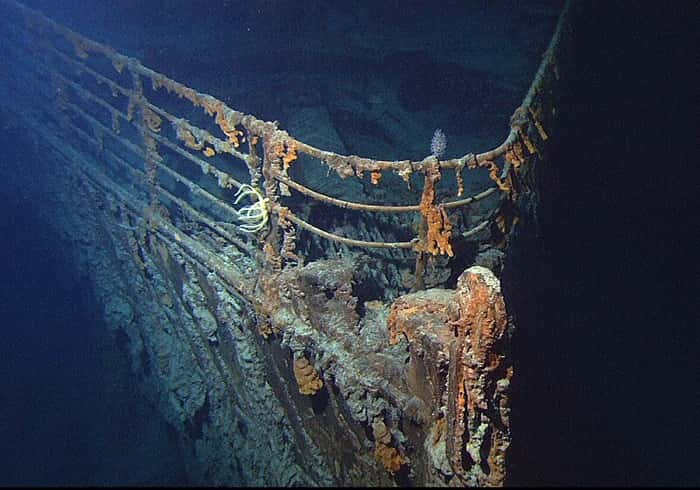
At 12:48 a.m. on September 1, 1985, that telltale trail materialized on the screens aboard the research vessel Knorr. What appeared first was a boiler—unmistakably matching those photographed on the Titanic back in 1911. Within hours, the cameras revealed something even more breathtaking: the distinctive bow of the Titanic herself, resting nearly 12,500 feet beneath the ocean's surface.
What They Found
What the expedition uncovered was as sobering as it was extraordinary. The ship lay split into two major sections—her bow remarkably well-preserved, her stern torn apart by the violence of the descent. Stretching between the two halves was a sprawling debris field littered with personal belongings: shoes, suitcases, bottles, and furnishings, each one a quiet testament to lives cut short without warning. Even after decades submerged, certain interior features remained identifiable, among them chandeliers and ornate fittings.
Legacy of the Discovery
The footage and photographs electrified audiences around the globe, turning Titanic mythology into something real and visible. For the first time, people could gaze upon the ship as she rested on the ocean floor, forging a powerful bridge between historical memory and physical evidence.
In the years since, the wreck has been the subject of numerous dives, film expeditions, and controversial salvage operations that have recovered thousands of artifacts, many of which are now on display in museums. The site has also ignited important debates about preservation, the ethics of disturbing what is effectively a mass grave, and the toll that human activity takes on such a fragile environment. Now safeguarded under UNESCO conventions, the Titanic wreck serves a dual role: a resource for scientific inquiry and a solemn place of remembrance.
By solving one of the 20th century's most enduring maritime mysteries, the 1985 discovery gave humanity something profound—a direct, tangible link to one of history's most unforgettable tragedies.