On May 10, 1775, something happened that went far beyond a mere curiosity in monetary history — the Second Continental Congress authorized America's very first paper currency. This bold move would become the financial engine powering the American Revolution.
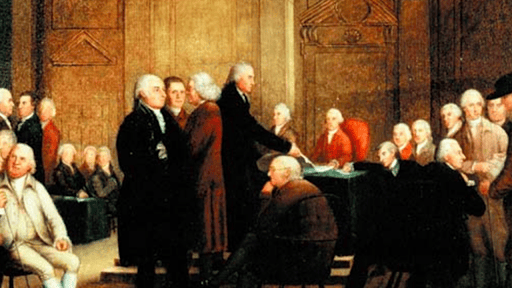
It all started with the First Continental Congress, where delegates representing the Thirteen Colonies came together with the goal of petitioning King George III to roll back the most oppressive policies Britain had imposed on colonial life. When it became abundantly clear that the King had no intention of budging, the Colonies convened a Second Continental Congress to determine their next course of action. But events overtook deliberation — the unexpected Battles of Lexington and Concord thrust the Colonies into open warfare. Just like that, the Second Continental Congress found itself serving as America's provisional government, a role it would hold throughout the conflict and for as long afterward as it took to establish a permanent governmental framework.
The resolution passed on May 10, 1775, authorized the printing of $3,000,000 in paper currency — a sum with considerably more purchasing power than it carries today — specifically to fund the war effort. Taxes collected from the colonists provided the backing for this new money. Notably, the currency bore the name "The United Colonies," the original designation for the fledgling nation before its leaders ultimately settled on The United States.
Now, while this marked the first paper currency that America itself issued, paper money wasn't exactly a novelty on these shores. Individual colonies had been printing their own currencies for quite some time, each one valid only within that particular colony's borders. What the Second Continental Congress' currency accomplished was something different entirely — it served as a bridge between all those separate colonial currencies, enabling the Colonies to combine their financial resources for war-related expenditures. This gave the Revolution a crucial boost at precisely the moment it was most needed, and the war's outcome might well have been different without it. There was a downside, though: by the time the fighting ended, rampant inflation had stripped the currency of nearly all its value. The expression "not worth a Continental" became a widely used phrase to describe anything considered virtually worthless.