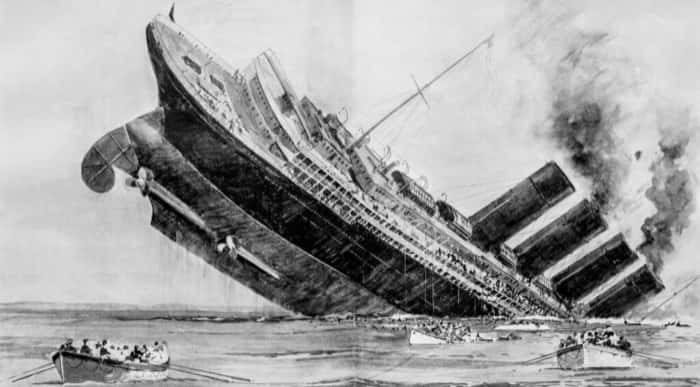
The Great War shattered every conventional understanding of armed conflict. It drew in nations from across the globe on a scale previously unimaginable, but perhaps more significantly, it unleashed military technologies that had never been tested in actual combat—submarines chief among them. These underwater vessels fundamentally transformed naval warfare, leaving surface ships scrambling to respond to a threat they simply weren't prepared for. The devastating reality of this new danger became horrifyingly clear on May 7, 1915, when over a thousand souls aboard the RMS Lusitania paid the ultimate price in a disaster that would reshape the trajectory of the entire conflict.
At the war's outset, the United States had chosen to stay on the sidelines, determined to avoid entanglement in Europe's battles. Yet Britain held enormous importance as a trading partner, which meant America had little appetite for honoring German attempts to blockade the British Isles. Even when Germany declared that unrestricted submarine warfare would target all vessels navigating British waters, the United States refused to budge from its commercial relationships.
That May, warnings appeared in several New York newspapers, cautioning Americans that boarding British ships meant accepting personal danger. Remarkably, one of these publications placed the warning directly next to an advertisement promoting the RMS Lusitania's upcoming voyage from New York to Liverpool. Tragically, few passengers took the message to heart.
Then, on May 7, not long after the RMS Lusitania crossed into British waters, a German U-boat—their designation for a submarine—spotted the vessel and fired a torpedo without hesitation. Despite having received guidance to guard against submarine threats, the captain lacked any practical knowledge of how to implement such defenses. Within just 20 minutes, the Lusitania slipped beneath the waves, claiming 1,198 lives and sparing only 761 survivors. As a passenger ship carrying numerous American citizens among the dead, the sinking dramatically shifted public sentiment in the United States against Germany and played a meaningful role in ultimately drawing America into the war.