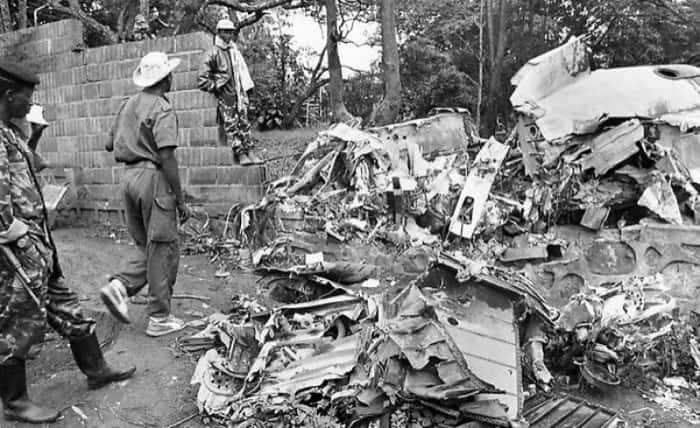
On the evening of April 6, 1994, a Dassault Falcon 50 jet carrying Rwandan President Juvénal Habyarimana and Burundian President Cyprien Ntaryamira was struck by surface-to-air missiles as it prepared to land in Kigali. The two heads of state were on their way home from a conference in Dar Es Salaam, Tanzania, where discussions had focused on bringing an end to ethnic skirmishes in Burundi.
As the presidential aircraft circled above Kigali International Airport under clear skies, it began its final approach for a landing expected around 8:20 pm local time. A separate flight carrying UNAMIR troops returning from leave had been scheduled to touch down just minutes earlier, but it was held off so that the president's jet could be given landing priority.
The first missile slammed into the aircraft's wing, while a second struck its tail. Carrying nine passengers and three French crew members, the plane erupted into flames in mid-air before plummeting directly into the garden of the presidential palace.
What followed in the hours after the attack was a devastating spiral of violence. The assassination served as the spark for two of the most horrific ethnic catastrophes of the late 20th century — the Rwandan genocide and the First Congo War. Hundreds of thousands of people were killed in the bloodshed that ensued.
To this day, the question of who bears responsibility for the attack remains unresolved. The prevailing theories point to Hutu-aligned power extremists who were fiercely opposed to the ongoing peace negotiations with the Rwandan Patriotic Front. An alternative view holds that the Tutsi rebels (RPF), led by current president Paul Kagame, were behind the actions.