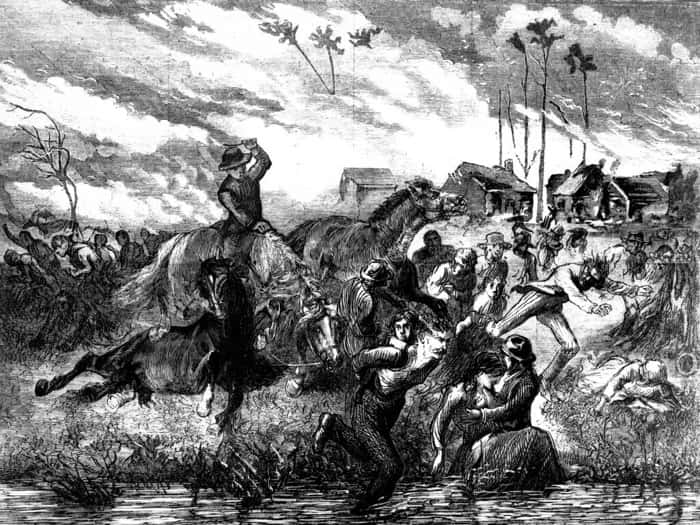
On October 8, 1871, the Great Chicago Fire captured the world's attention — but hundreds of miles away in northeastern Wisconsin, a far more catastrophic inferno was unfolding. The Peshtigo Fire would go on to claim the grim distinction of being the deadliest wildfire in U.S. history, dwarfing the destruction in Chicago by almost every measure.
A Perfect Storm of Fire
- The Setting: Peshtigo, Wisconsin, a thriving lumber town home to about 1,700 residents, was ringed by tinder-dry pine forests and logging trails blanketed in sawdust.
- The Spark: Slash-and-burn land-clearing practices were widespread at the time, leaving small fires quietly smoldering throughout the region.
- The Trigger: A cold front swept through that evening, unleashing gale-force winds that fanned those scattered embers into a full-blown firestorm.
What followed was almost beyond comprehension. Winds surged past 100 miles per hour, and temperatures climbed above 2,000°F. Those who lived through it described something like a fire tornado — a roaring vortex powerful enough to hurl houses, trains, and even human beings into the sky.
A Town Erased in Hours
- Around 9:00 p.m., the wall of flame reached Peshtigo.
- In just two hours, nothing remained of the town.
- Desperate residents plunged into the Peshtigo River seeking refuge from the heat, though some perished there from drowning or hypothermia.
Peshtigo was only the beginning. The firestorm roared on to devour 16 other communities, flattening homes, farms, and forests indiscriminately. By the time it was over, more than 1.2 million acres had been turned to ash.
The Death Toll
- Official records are woefully incomplete — many were consumed by the fire itself.
- The estimated death toll falls somewhere between 1,500 and 2,500 people.
- Hundreds of victims, never identified, were buried together in mass graves.
- Entire families simply disappeared without a trace.
Reverend Peter Pernin, one of those who survived the nightmare, later described how the fire vaulted across the river and swallowed both sides of town. He likened the devastation to nature's own version of a nuclear explosion.
Why So Forgotten?
Timing is everything, and it worked against Peshtigo. Occurring on the very same day as the Great Chicago Fire, the disaster was immediately eclipsed. Chicago had its newspapers and the nation's sympathetic gaze. Peshtigo was left with ashes and silence. And yet the stark reality remains: the Peshtigo Fire killed five times more people than the Chicago blaze.
Legacy and Lessons
- The Peshtigo Fire Museum now stands on the very ground where the old town once existed, safeguarding artifacts and personal stories from that terrible night.
- A mass grave and cemetery remain as solemn memorials to those who perished.
- The catastrophe reshaped how scientists and military planners understood firestorms; its lessons would later inform World War II bombing strategies decades down the line.
Still, in the fire's immediate wake, precious little actually changed. Logging operations expanded. Fires kept burning. The hard-won lesson was buried — right alongside the victims themselves.