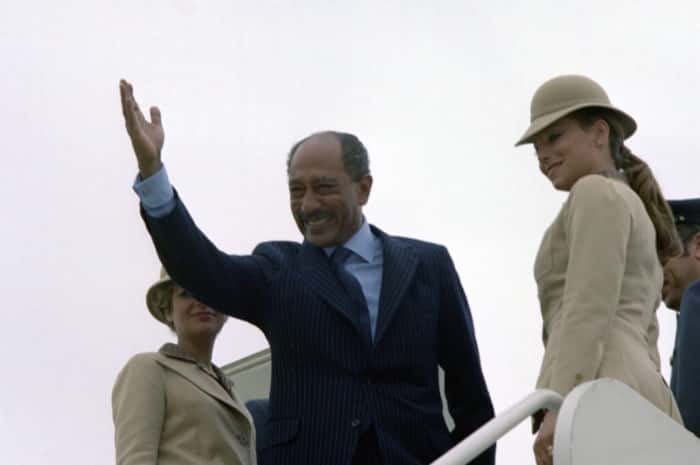
It was October 6, 1981, and the world was watching as Egyptian President Anwar Sadat sat among dignitaries at a military parade in Cairo — a celebration that would end in one of modern history's most stunning acts of political violence. The parade itself was an annual affair, marking Egypt's crossing of the Suez Canal during the 1973 Yom Kippur War. No one could have predicted it would become the backdrop for an assassination witnessed globally.
Anwar Sadat was both a decorated war hero and a Nobel Peace Prize laureate, yet few leaders have been as deeply polarizing. The 1978 Camp David Accords — his historic peace agreement with Israel, negotiated with the help of U.S. President Jimmy Carter — earned him widespread admiration in the West. Across the Arab world, however, the reaction was one of outrage. When Egypt became the first Arab country to formally recognize Israel in 1979, the consequences were swift: suspension from the Arab League and a torrent of opposition from hardline Islamists and nationalist factions alike.
The Background
It was within this volatile atmosphere of domestic turmoil and regional isolation that the groundwork for Sadat's killing was laid. Islamist organizations such as Egyptian Islamic Jihad and al-Jama'a al-Islamiyya — groups Sadat had once tolerated as a counterweight to leftist movements — had turned sharply against him. They viewed his pursuit of peace with Israel as an unforgivable betrayal, and by 1981, opposition had escalated to a breaking point.
Sadat responded with force in September 1981, launching a sweeping crackdown that saw over 1,500 people detained — among them Islamists, intellectuals, and even Christian clergy. Yet this heavy-handed approach failed to root out the conspiracy taking shape inside the very institution charged with his protection: the Egyptian military.
On that fateful day, as military jets streaked across the sky and tanks paraded past, the strike came from within the procession itself. Lieutenant Khalid Al-Islambuli, serving in an artillery unit, led the assassination squad. Concealed inside a troop truck, the attackers jumped out, hurled grenades, and unleashed gunfire on the reviewing stand. Sadat, apparently mistaking the chaos for part of the show, rose to his feet in salute. Within moments, he collapsed, mortally wounded.
The Attack
From start to finish, the assault lasted less than two minutes. The carnage left 11 people dead and 28 others wounded, among them dignitaries from the U.S., Ireland, and Oman. Rushed to the military hospital, Sadat was pronounced dead shortly after arrival. His injuries were devastating, including severe internal bleeding and lung damage.
The Fallout
The reverberations were instant and far-reaching. A number of Arab governments quietly welcomed the news — Syrian headlines branded Sadat the "ultimate traitor" — while much of the international community grieved. Former U.S. Presidents Nixon, Ford, and Carter all attended his funeral, joined by Israeli Prime Minister Menachem Begin. Notably absent was the sitting U.S. President, Ronald Reagan, who stayed away citing security concerns.
Sadat was laid to rest at the Unknown Soldier Memorial in Cairo, his epitaph reading: "Hero of War and Peace" — words that captured the essence of a leader defined equally by confrontation and reconciliation. Eight days after the attack, his successor, Hosni Mubarak — himself injured during the assault — assumed the presidency, going on to rule for nearly three decades.