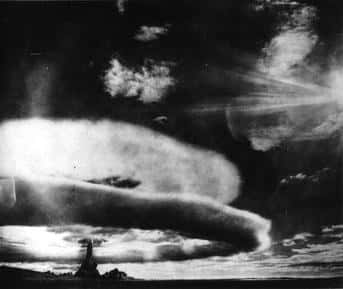
The trajectory of the Cold War — an era defined by rivalry, anxiety, and relentless competition — shifted dramatically on October 6, 1951. On that day, Soviet Premier Joseph Stalin delivered a declaration that would send tremors across the globe: the Soviet Union had successfully built an atomic bomb. In one stroke, this announcement upended the international balance of power, ending the United States' exclusive hold over nuclear weapons and ushering in a terrifying new chapter in world affairs.
Interesting Facts:
- Soviet Premier Joseph Stalin confirmed on October 6, 1951, that the Soviet Union possessed an atomic bomb — a revelation that validated fears already circulating in the West ever since the Soviets carried out a successful test in 1949.
- The announcement poured fuel on the already smoldering nuclear arms race between the Soviet Union and the U.S., driving both superpowers into a frantic competition to amass ever-larger and more devastating arsenals of weapons.
- Though the Soviet Union had actually detonated its first atomic device, codenamed RDS-1, on August 29, 1949, it was Stalin's public declaration in 1951 that served as the formal acknowledgment of the Soviets' place in the nuclear arms race.
- Espionage played a critical role in accelerating the Soviet Union's path to the bomb. Spies — especially those who had infiltrated the Manhattan Project — funneled vital information about U.S. nuclear developments to the USSR, highlighting the shadowy world of intelligence and subterfuge that defined the Cold War era.
- The international community was rocked by Stalin's claim, which signaled a fundamental realignment of global power. The U.S.'s monopoly on nuclear weaponry had come to an end, giving rise to a doctrine of mutual atomic deterrence that would become known as "Mutually Assured Destruction" (MAD).
- Cold War Context: This announcement arrived at the peak of the Cold War, an era marked by massive military build-ups, widespread espionage, and the ever-present specter of nuclear war between the superpowers.
- On the world stage, Stalin's declaration stood as a turning point in history, reshaping the landscape of global politics, diplomacy, and warfare for decades to come.