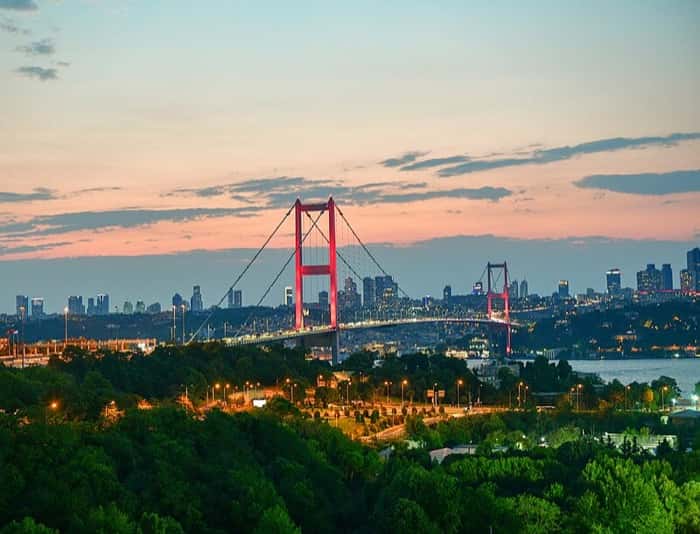
On October 30, 1973, Istanbul, Turkey witnessed the completion of the Bosphorus Bridge — a groundbreaking feat of engineering that became the first road bridge ever to connect Europe and Asia. Stretching across the Bosphorus Strait, this landmark structure quickly evolved into far more than a crossing point; it stood as a powerful symbol of Istanbul's unique position straddling two continents. Fast forward to the present day, and the bridge serves as a genuine lifeline for the city. Thousands of vehicles traverse it daily, dramatically cutting down the time it takes to travel between Istanbul's European and Asian sides.
Fun Facts:
- The Bosphorus Bridge, which also goes by the name the 15 July Martyrs Bridge, stretches across the Bosphorus Strait to join Istanbul's European and Asian sides. It holds the distinction of being the first bridge to connect the two continents by road.
- At the time of its completion, this 1,560-meter (5,118-foot) structure ranked as the fourth-longest suspension bridge on the planet.
- Work on the Bosphorus Bridge got underway in 1970, and remarkably, the entire project wrapped up in just three years. Its opening coincided with the 50th anniversary of the founding of the Republic of Turkey.
- The bridge was designed by British engineers Gilbert Roberts and William Brown, who collaborated with Turkish engineers on the project. German and British companies handled the actual construction.
- Rising 64 meters (210 feet) above the water, the Bosphorus Bridge provides ample clearance for large ships navigating the strait. This height plays a pivotal role in keeping one of the world's most important maritime corridors open to global shipping traffic, highlighting the bridge's international significance.
- When it first opened, only vehicles were permitted to cross the bridge. Over time, however, pedestrians were granted access during special events and celebrations.
- The Bosphorus Bridge is now one of three suspension bridges that span the divide between Europe and Asia in Istanbul. It continues to be an indispensable piece of the city's transportation infrastructure, with more than 200,000 vehicles crossing it every day.