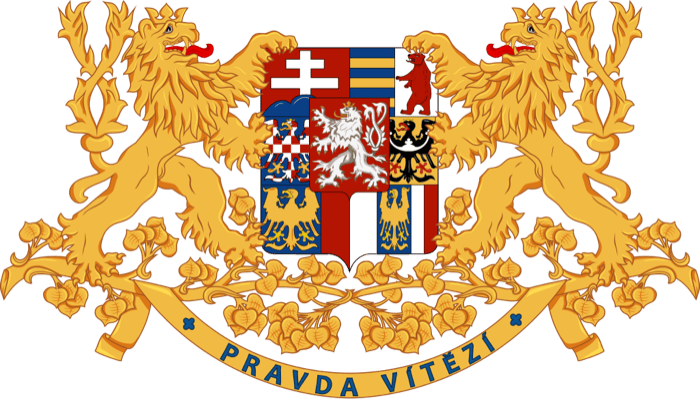
At the dawn of the 20th century, the Austro-Hungarian Empire still stood as one of Europe's Great Powers. This dual monarchy, forged in 1867, united the Austrian Empire and the Kingdom of Hungary under a single political framework. Yet beneath the surface, deep ethnic divisions and chronic instability plagued the multiethnic state, steadily eroding its foundations as World War I loomed. When the Empire finally teetered on the brink of total collapse, the Czechoslovak National Council moved decisively — and on October 28, 1918, in the wake of World War I's conclusion, they officially brought the Republic of Czechoslovakia into existence.
The Impact of WWI
By the time the Great War arrived in 1914, the cracks running through the Austro-Hungarian Empire had become impossible to ignore. A patchwork of ethnic groups — among them the Serbs, Czechs, and Poles — each sought recognition and a distinct sense of identity. This fierce competition fractured the Empire from within, as the divergent ambitions of these communities undermined any sense of cohesion. Political and social friction never let up, and civil unrest became a familiar feature of daily life.
A fundamental lack of unity hobbled the Empire's military forces, making it exceedingly difficult to maintain a coherent war effort. Morale steadily deteriorated as a consequence. On top of that, the demands of war ravaged food supplies, triggering a dramatic surge in famine. Discontent and civil unrest only deepened in response.
During the war's closing months, the Emperor made a last-ditch effort to preserve the monarchy by restructuring it entirely — but by then, the internal damage had gone too far to repair. In 1918, Hungary formally broke away from Austria.
Key Events of October 28th
With the Austro-Hungarian Empire on the verge of its official collapse, members of the National Committee of Czechoslovakia recognized their moment and seized it. On October 28th, they assumed peaceful control of government offices and military headquarters, formally proclaiming the creation of a Czechoslavik state.
Moving swiftly, the committee passed its inaugural piece of legislation, which declared Czechoslovakia a Republic and laid out the framework for its government. They also chose Tomáš Garrigue Masaryk as the nation's first president and appointed its first prime minister.
The Rise of a New Nation
Born from the wreckage of the Austro-Hungarian Empire, Czechoslovakia brought together a richly diverse population under one flag. Its citizens embraced a newly established parliamentary democracy built on foundational principles — freedom of speech, freedom of the press, and freedom of religion. Still, the country's multi-ethnic composition planted seeds for future conflicts that echoed tensions of the past.
Today, the founding of Czechoslovakia holds deep significance in the histories of both the Czech Republic and Slovakia, which went their separate ways in 1993. Every year, October 28th is honored as a national holiday in recognition of that pivotal moment.