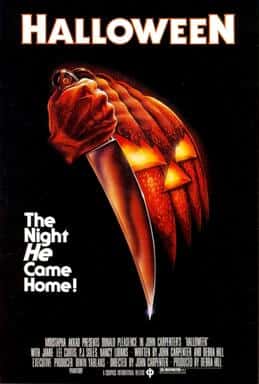
On October 25, 1978, the landscape of American horror shifted in ways no one could have predicted. John Carpenter directed Halloween on a shoestring budget of just $300,000, yet the film went on to rake in an astonishing $70 million worldwide. To this day, it stands as an iconic piece of cinema, and its impact on the slasher genre, horror filmmaking, and pop culture at large simply cannot be overstated.
The Storyline
Audiences were introduced to Michael Myers through Halloween — a seemingly unstoppable killer who breaks free from a sanitarium and returns to his hometown of Haddonfield, Illinois. His target? Laurie Strode, a teenage babysitter portrayed by Jamie Lee Curtis, then completely unknown, in what would be her film debut. Myers barely speaks, radiates an eerie calm, and through that chilling stillness became the blueprint for the silent, masked villain — a figure representing pure evil.
What makes the film's storyline so effective is its deceptive simplicity. Michael Myers murders his sister as a young child, then escapes 15 years later to pick up where he left off. Laurie, fighting to shield the children in her care, evolves into the archetype of the "final girl," a concept that would go on to become a defining hallmark of the slasher genre.
Few elements of Halloween have endured quite like its haunting musical score, which Carpenter composed himself. Built around a minimalist piano theme set to an unusual 5/4 time signature, the music ratchets up the film's tension and remains instantly recognizable decades later. Remarkably, Carpenter put the entire score together in just three days — a testament to the idea that the simplest tools can sometimes leave the deepest impression.
The Reaction
Both critics and moviegoers were hooked from the start. Working within its tight budget, Halloween leveraged precise camera work, inventive lighting, and masterful pacing to earn widespread acclaim for its artistry. Particularly groundbreaking was its opening sequence — a long, unbroken shot filmed entirely from the killer's point of view.
The film also ignited academic discussion and feminist critique. Certain viewers interpreted the violence directed at sexually active teenagers as moralistic messaging, while others — notably scholar Carol J. Clover — made the case that characters like Laurie were actually empowered, surviving through intelligence and resilience. Whatever one's reading of the film, Halloween represented a watershed moment: women in horror could now be heroines, not merely victims.
Off screen, Halloween grew into a massive franchise encompassing over a dozen films, along with novels, comics, video games, and merchandise. It laid the groundwork for the modern horror blockbuster and served as inspiration for countless filmmakers. Its villain, Michael Myers — sometimes referred to simply as "The Shape" — has ascended to the status of a cultural icon.
The film's enduring importance was formally recognized in 2006, when it was chosen for preservation in the U.S. National Film Registry as a work deemed "culturally, historically, or aesthetically significant." More than 40 years after its release, Halloween remains a potent cultural phenomenon. Every October, fresh audiences discover its terrors for the first time, and Michael Myers keeps lurking in the shadows of our collective imagination.