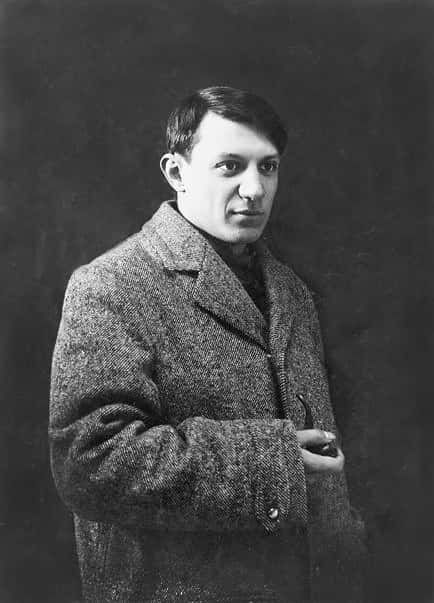
Born on October 25, 1881, in Málaga, Spain, the legendary Pablo Picasso came into a world that he would eventually transform through art. His father, José Ruiz y Blasco, worked as both a painter and an art teacher, while his mother, Maria Picasso y Lopez, nurtured his creative instincts from the very beginning. In fact, Maria recalled that her son's earliest word was "piz" — a childish abbreviation of lápiz, the Spanish word for pencil. She cherished his artwork and was a constant source of encouragement throughout his early years. José, recognizing his son's natural talent, actively cultivated Picasso's budding artistic abilities.
José took on the role of Picasso's formal instructor when the boy was just seven years old. By 13, Picasso had enrolled in the School of Fine Arts, the very institution where his father taught. Though José's guidance proved invaluable, Picasso's fierce independence and drive to forge his own artistic identity created friction between father and son. He chafed against the rigid conventions of classical art education — a frustration that would profoundly influence the direction of his career. When he was 16, he entered the Real Academia de Bellas Artes de San Fernando in Madrid, only to quickly grow restless with the restrictive curriculum and abandon his studies altogether.
Once liberated from academic constraints, Picasso's creative output was nothing short of revolutionary. He co-founded the Cubist movement, co-invented collage as an art technique, invented constructed sculpture, and broke new ground with the artistic style of Crystal Cubism. Throughout his career, Picasso moved through several distinct artistic periods, fearlessly experimenting with different styles, embracing new materials, and constantly pushing boundaries. Among his most celebrated masterpieces are The Old Guitarist (1903), Les Demoiselles d'Avignon (1907), and Guernica (1937). Picasso passed away on April 8, 1973, in Mougins, France, at the age of 91.