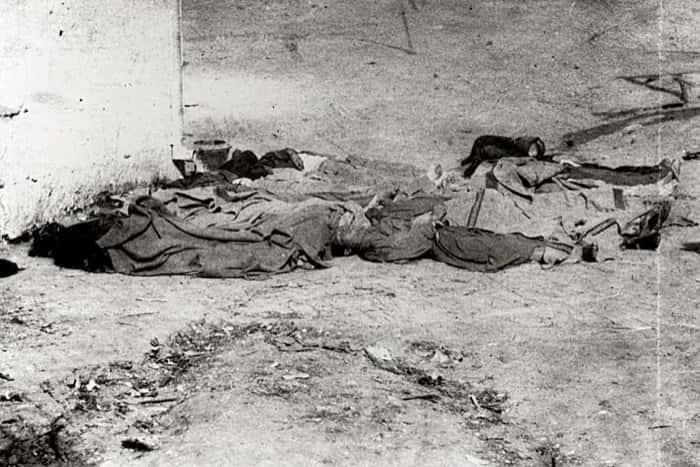
Throughout the 1870s, racial hostility gripped much of the western United States as waves of newcomers scrambled to build lives in recently acquired territories. Unemployment and instability plagued many of these migrants, and Chinese immigrants frequently became convenient scapegoats for their hardships. That simmering hatred erupted catastrophically on October 24, 1871, when a mob of over 500 white and Latino residents of Los Angeles descended upon Chinatown, killing 18 Chinese immigrants in what stands as one of the largest mass lynchings in American history. The date endures as a deeply painful chapter in the country's story.
Background Tensions
Anti-Chinese hostility had been steadily intensifying throughout the decade before the 1871 Chinese Massacre. Drawn westward by the promise of better prospects, many migrants from the eastern states arrived only to encounter harsh realities. When the transcontinental railroad was completed in 1870, large numbers of these newcomers found themselves out of work and wrongly directed their frustration at Chinese immigrants, accusing them of stealing job opportunities.
The political and social climate in Los Angeles only made things worse. Local newspapers stoked racist attitudes among residents, depicting Chinese immigrants as barbarians. A pervasive atmosphere of lawlessness hung over the city—crime ran rampant, and accountability was hard to come by. On top of all this, the legal system itself was stacked against immigrants. Chinese individuals were prohibited by state law from testifying against white people in court, a provision that effectively denied them any meaningful legal protection from discrimination.
Triggering Moment
The devastating massacre was set in motion on the morning of October 24, when violence erupted between two rival Chinese groups. During the disorder, a white man lost his life, and a police officer sustained serious injuries while attempting to restore order.
Word spread rapidly—and inaccurately—that Chinese immigrants had turned violent against the white population. Within hours, a mob numbering nearly 500 had assembled and launched an assault on the Chinese community. As the evening wore on, rioters tore through Chinese-owned shops, looting and setting buildings ablaze. Men were hauled into the streets, where they were savagely beaten and killed.
By the time the bloodshed subsided, 18 men and teenage boys lay dead. It is believed that only one of those victims had any actual connection to the original conflict that sparked the violence.
Long-term Impact
In the aftermath, authorities arrested eight rioters, all of whom received manslaughter convictions. Yet every one of those convictions was later overturned in court, meaning no individual was ultimately held accountable for the atrocities committed against the Chinese community. Decades would pass before the racial prejudice targeting Chinese residents even began to fade.
For generations, the broader Los Angeles area largely tried to bury the memory of the Chinese Massacre. In more recent times, though, historians and community activists have pushed to bring this tragic event back into public consciousness. On the 150th anniversary of the massacre in 2021, the mayor of Los Angeles delivered an official apology to the Chinese community, and a permanent memorial was established to honor those who lost their lives.