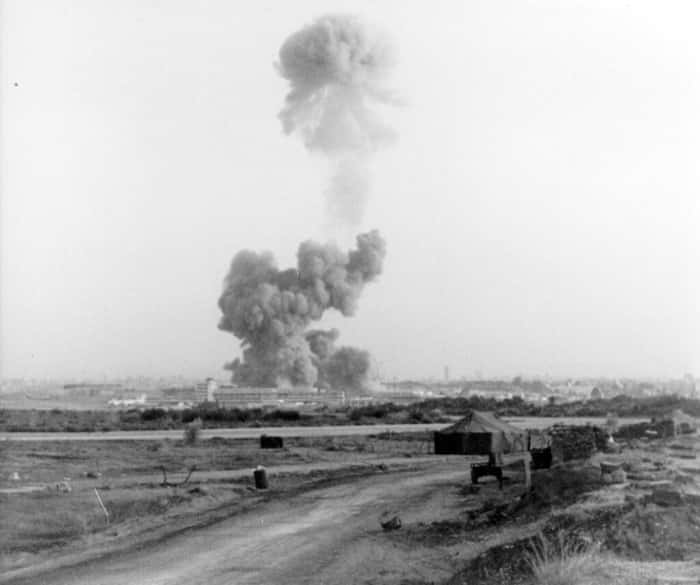
On October 23, 1983, Beirut, Lebanon became the site of a devastating assault when two suicide bombers struck both the U.S. Marine barracks and a French military base. The blasts claimed the lives of 241 American servicemen and 58 French paratroopers, sending shockwaves across the globe. Set against the backdrop of Lebanon's brutal civil war, this horrific event would go on to reshape the trajectory of U.S. and international military engagement in profound ways.
Interesting Facts:
- The backdrop for this tragedy was the Lebanese Civil War, a chaotic and bloody struggle among rival factions vying for power across the country. Both U.S. and French troops had been deployed as part of a multinational peacekeeping force tasked with bringing stability to the volatile region.
- That morning of October 23, two trucks packed with explosives barreled into the U.S. Marine barracks and the French military base in Beirut. The detonations came almost simultaneously, snuffing out the lives of 241 American servicemen, mostly Marines and 58 French paratroopers in a matter of seconds.
- Responsibility for the bombings was later linked to Hezbollah, a militant organization backed by Iran. The assault stood out as one of the first major suicide attacks directed at Western military forces operating in the Middle East.
- For the U.S. military, the barracks bombing represented the single deadliest day of losses since World War II. The tragedy deeply unsettled the American public and sparked intense debate over the wisdom of maintaining a military presence in Lebanon.
- In the aftermath, President Ronald Reagan publicly pledged to continue the mission. However, by early 1984, deteriorating conditions on the ground forced the withdrawal of U.S. forces from Lebanon as the security environment grew ever more perilous.
- The devastation underscored an escalating terrorist threat emerging from the Middle East and served as a catalyst for a significant pivot in U.S. foreign policy, steering it toward a greater emphasis on counterterrorism operations throughout the region.
- To honor those who lost their lives, several memorials have been dedicated, among them the Beirut Memorial at Camp Lejeune in North Carolina — the home base for many of the Marines who perished in the attack.