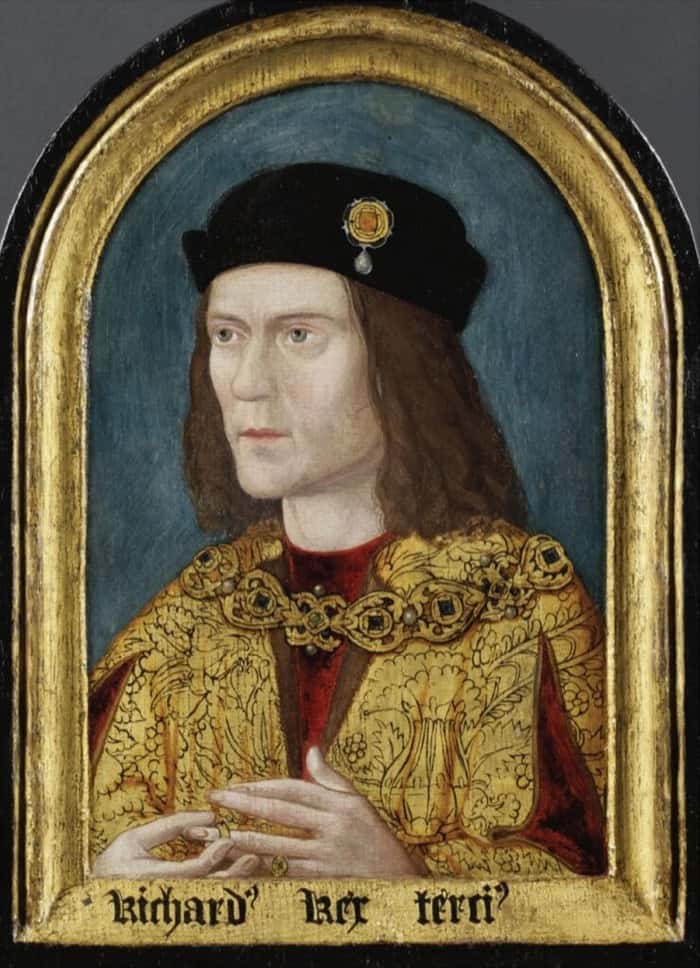
Fotheringhay Castle in Northamptonshire witnessed a birth on October 2, 1452, that would leave an indelible mark on English history. Richard of York arrived that day — a child destined to become King Richard III of England, whose story would play out amid the Wars of the Roses, the savage power struggle between the houses of York and Lancaster that reshaped the nation's destiny.
Early Life and Family
Born to Richard, 3rd Duke of York, and Cecily Neville, Richard entered the world as the eleventh child in a large and ambitious family. As the youngest surviving son, few would have predicted he'd become a pivotal figure in national politics. But these were volatile times, and the fierce contest for England's throne had a way of pulling everyone into its orbit. Through his father's lineage tracing back to Edward III, the Yorkist family held a powerful claim to the crown — one that put them on a collision course with the Lancastrians in power.
Stability was a luxury Richard rarely enjoyed growing up. His father fell at the Battle of Wakefield in 1460, and in the aftermath, the young Richard and his brother George fled to the Low Countries for safety. Their return came after their elder brother Edward claimed the throne as Edward IV in 1461. Shortly thereafter, Richard received the title Duke of Gloucester and was knighted — the first steps in what would become a lifetime devoted to military and political service.
Training and Rise to Power
Richard's formative years were largely shaped by his powerful cousin, Richard Neville, Earl of Warwick — the man known as the "Kingmaker." It was at Warwick's Middleham Castle that the young Richard III of England honed the martial abilities and administrative expertise befitting a nobleman of his rank. These years also forged important personal bonds, notably with Anne Neville, Warwick's daughter, who would eventually become his wife.
Unwavering devotion to Edward IV was the hallmark of Richard's early public life. He distinguished himself as a capable commander at the battles of Barnet and Tewkesbury in 1471, building a formidable military reputation. His marriage to Anne Neville in 1472 further cemented his influence across northern England, where he ruled with considerable authority and built a powerful regional stronghold.
Seizing the Throne
Everything changed in April 1483 with the sudden death of Edward IV. The heir to the throne, Edward V, was just twelve years old. Richard stepped into the role of Lord Protector, but the arrangement proved short-lived — within months, he declared his nephew illegitimate and claimed the crown for himself on June 26, 1483. Few moments in English history have sparked as much debate and controversy.
Nothing haunts Richard's reputation quite like the mystery surrounding Edward V and his younger brother, Richard of Shrewsbury — the ill-fated duo known as the "Princes in the Tower." The boys disappeared from public sight during Richard's time on the throne, and the widespread suspicion that they were murdered has cast a long shadow over his legacy ever since.
Death and Legacy
Richard's time as king proved remarkably short — a little over two years. On August 22, 1485, he met his end at the Battle of Bosworth Field, cut down while battling the forces of Henry Tudor. With his death, the Plantagenet dynasty breathed its last, giving way to the Tudor age under Henry VII. Richard holds the solemn distinction of being the last English king to die in battle.
William Shakespeare and generations of chroniclers and dramatists before and after him crafted an image of Richard III as an archetypal villain. Yet modern historians have worked to complicate that portrait, highlighting his meaningful administrative reforms and steadfast loyalty to those who served him — even as they acknowledge the unresolved darkness surrounding the fate of the princes.