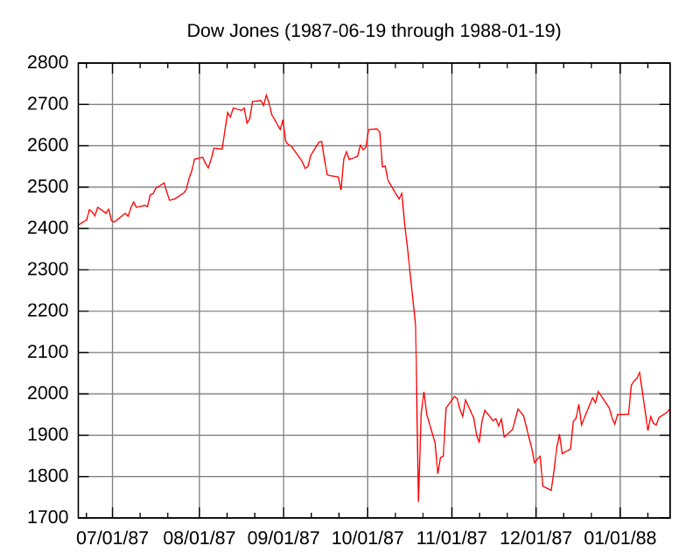
The date October 19, 1987, forever carries the weight of what became known as 'Black Monday' — a day that sent shockwaves through the financial world when the stock market suffered its worst single-day percentage plunge in history. The Dow Jones Industrial Average collapsed by more than 22%, sparking widespread panic and stoking fears of an imminent economic disaster that quickly rippled through markets around the globe.
Interesting Facts:
- The Dow Jones Industrial Average shed a jaw-dropping 508 points on Black Monday, amounting to a 22.6% loss in just one trading session. To this day, no single-day percentage decline in U.S. stock market history has surpassed it.
- What drove the crash? A perfect storm of factors converged — computerized trading programs amplified selling pressure, investors succumbed to panic, and economic uncertainties had been building in the period before the collapse.
- Black Monday's fallout stretched far beyond American borders. Major stock exchanges in the UK, Japan, and Hong Kong all experienced dramatic drops, transforming what began as a domestic crisis into a full-blown worldwide financial emergency.
- Though many braced for a deep and prolonged recession, the US economy recovered with surprising speed. Much of the credit goes to the Federal Reserve, led by Chairman Alan Greenspan, which moved swiftly to inject liquidity into the system and pressed banks to continue lending — moves that proved essential in rebuilding market confidence.
- In the aftermath, regulators enacted sweeping changes to how markets operated. Perhaps the most significant reform was the creation of "circuit breakers" — automatic mechanisms designed to temporarily pause trading whenever the market falls too steeply within a single day.
- Widespread anxiety gripped investors who worried that Black Monday might herald a repeat of the Great Depression. However, swift government action combined with key market adjustments succeeded in steadying the economy before the worst fears materialized.
- Decades later, Black Monday remains a focal point of study among financial analysts and economists alike. It stands as a powerful cautionary tale about the dangers of unchecked market speculation, the vulnerabilities introduced by computerized trading, and the indispensable importance of strong regulatory safeguards.