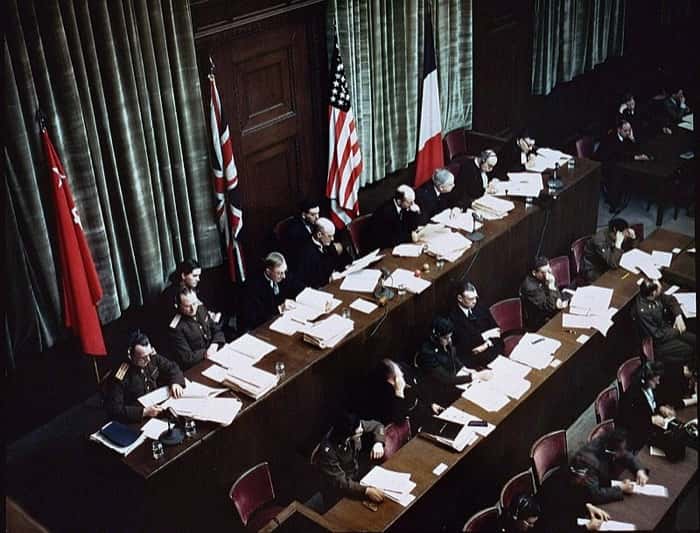
On October 18, 1945, history was made when the Nuremberg War Crimes Trial officially got underway. Never before had the world seen anything quite like it — a legal proceeding designed to hold Nazi leaders directly responsible for genocide, crimes against humanity, and war crimes. By pursuing justice for the unspeakable horrors unleashed during World War II, this groundbreaking trial redefined the boundaries of international law.
Interesting Facts:
- Nothing like the Nuremberg Trials had ever been attempted before. For the first time, high-ranking officials of Adolf Hitler's regime — including military commanders and key political figures — were brought before a court to answer for their involvement in the Holocaust and other wartime atrocities.
- Nuremberg, Germany, was deliberately selected as the venue for the proceedings. The city carried powerful symbolic weight as the former backdrop for Nazi rallies, and its courthouse had survived the war in relatively intact condition.
- Among the 24 men who stood before the International Military Tribunal (IMT) were prominent Nazi figures such as Hermann Göring, Rudolf Hess, and Joachim von Ribbentrop. The tribunal itself was composed of judges representing four nations: the United States, the United Kingdom, the Soviet Union, and France.
- For the first time in the history of international law, defendants faced formal charges of crimes against humanity, war crimes, and waging aggressive war — a truly unprecedented use of such charges in an international court of law.
- Spanning from 1945 to 1946, the Nuremberg Trials concluded with many defendants receiving sentences of death or lengthy imprisonment. Notably, Hermann Göring took his own life before his execution could be carried out.
- One of the most lasting contributions of the trials was the legal precedent they set: individuals — not merely nations — could be held personally accountable for committing war crimes under international law.
- The legacy of Nuremberg extends far beyond the courtroom where it took place. It provided the groundwork for modern institutions of international justice, including the International Criminal Court (ICC), which to this day prosecutes war criminals across the globe.