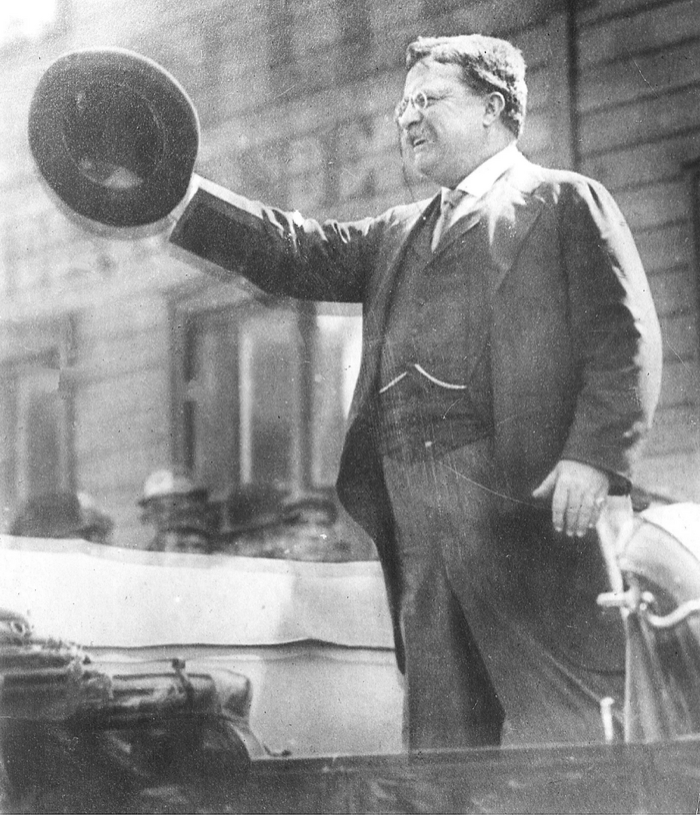
On October 14, 1912, former President Theodore Roosevelt found himself the target of an assassin's bullet while on the campaign trail in Wisconsin, seeking a third presidential term. Remarkably, despite being struck at close range, Roosevelt determined that his wounds weren't life-threatening — and proceeded to deliver his speech to the assembled crowd, speaking for a full 84 minutes.
The Would-Be Assassin's Dream
The man behind the attack was John Schrank, a German-born salon shopkeeper. Following his arrest, authorities found a note on him that laid out an extraordinary and disturbing motivation. Schrank described a vivid dream in which the ghost of President William McKinley had come to him, pointing the finger at Teddy Roosevelt as the man behind his murder. In this spectral vision, McKinley urged Schrank to seek vengeance on his behalf.
That morning of October 14, as Roosevelt stood outside the Gilpatrick Hotel greeting supporters, Schrank approached and discharged a .38 caliber revolver directly into his chest.
Roosevelt's "Bull Moose" Speech
Even amid the pandemonium that followed, Roosevelt kept his wits about him, taking stock of his condition while bystanders subdued Schrank. Drawing on his background as both an avid hunter and an anatomist, he quickly judged that the wound wouldn't kill him. The key indicator? He wasn't coughing up blood — which told him the bullet had missed his lungs entirely.
Rather than seeking immediate medical care, Roosevelt made the extraordinary decision to press on with his campaign appearance. In a moment that would become legendary, he opened his remarks by holding up his bloodstained shirt for the audience to see, proclaiming, "It takes more than that to kill a Bull Moose." The nickname was a reference to his Progressive Party, which Roosevelt had founded after failing to secure the Republican nomination for reelection. He went on to speak for 84 minutes before finally allowing a medical professional to examine him.
What likely saved Teddy Roosevelt's life, doctors later determined, was a combination of two objects. The bullet had first torn through the 50 pages of paper he was holding in preparation for his speech, then struck a steel eyeglass case tucked in his pocket. Together, these items absorbed enough of the bullet's energy to significantly lessen its force. Even so, the bullet remained lodged in Roosevelt's chest permanently — he would carry it with him for the rest of his days.
The Aftermath
Following his arrest, John Schrank underwent evaluation and was deemed unfit to stand trial. He was subsequently committed to a mental hospital, where he spent the remainder of his life until his death in 1943.
The assassination attempt brought the presidential race to a temporary standstill. Woodrow Wilson, the Democratic nominee, and William Taft, the Republican nominee, both chose to halt their campaigning as a gesture of respect toward Roosevelt. Yet despite the wave of public sympathy that followed, the fractured state of the Republican Party proved insurmountable. In the end, it was the Democratic nominee, Woodrow Wilson, who claimed victory in the election.