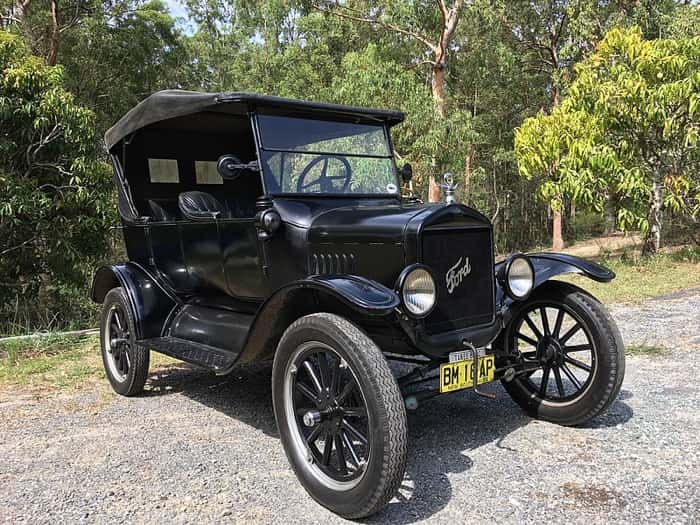
What single individual could reshape an entire industry? In the opening decades of the 20th century, Henry Ford proved it was possible. The Ford Motor Company rolled out its one-millionth automobile on October 12, 1915 — a staggering milestone that left a permanent mark on the world of transportation. By pioneering the assembly line approach to manufacturing, Ford put cars within reach of ordinary people, fundamentally altering the way society moved and the way daily life was structured.
Fun Facts:
- A landmark moment in automotive history arrived on October 12, 1915, when the Ford Motor Company celebrated the production of its 1 millionth car. Remarkably, the company's factories were churning out close to 9,000 vehicles per day at that point.
- None of this would have been possible without Henry Ford's bold decision to implement the moving assembly line in 1913. This manufacturing breakthrough sent production speeds soaring while slashing costs in ways the industry had never seen before.
- The vehicle that crossed this historic threshold was none other than the Model T — arguably the most legendary automobile of its era. Affordable and dependable, it earned the nickname 'car for the common man' and represented a groundbreaking step toward making transportation available to everyone.
- Ford's assembly line innovation compressed the time needed to build a single car from 12 hours down to about 90 minutes. That extraordinary leap in efficiency brought the Model T's price tag within reach of a much wider customer base, setting in motion changes that would transform how people traveled and structured their daily lives.
- In 1914, Ford made waves beyond the factory floor by introducing the $5 workday — a revolutionary wage for industrial laborers of that period. This bold move elevated workers' quality of life and fostered a more loyal, satisfied workforce, earning its place as a notable chapter in the history of labor rights.
- More than just a production number, Ford's one millionth car stood as a powerful symbol: the automobile was no longer a plaything reserved for the rich. It had become an accessible means of transportation for ordinary people, triggering a sweeping societal transformation in how we live and work.
- When the final Model T rolled off the line in 1927, the total production count exceeded 15 million units. That extraordinary figure secured the Model T's legacy as one of the most consequential vehicles the world has ever known.