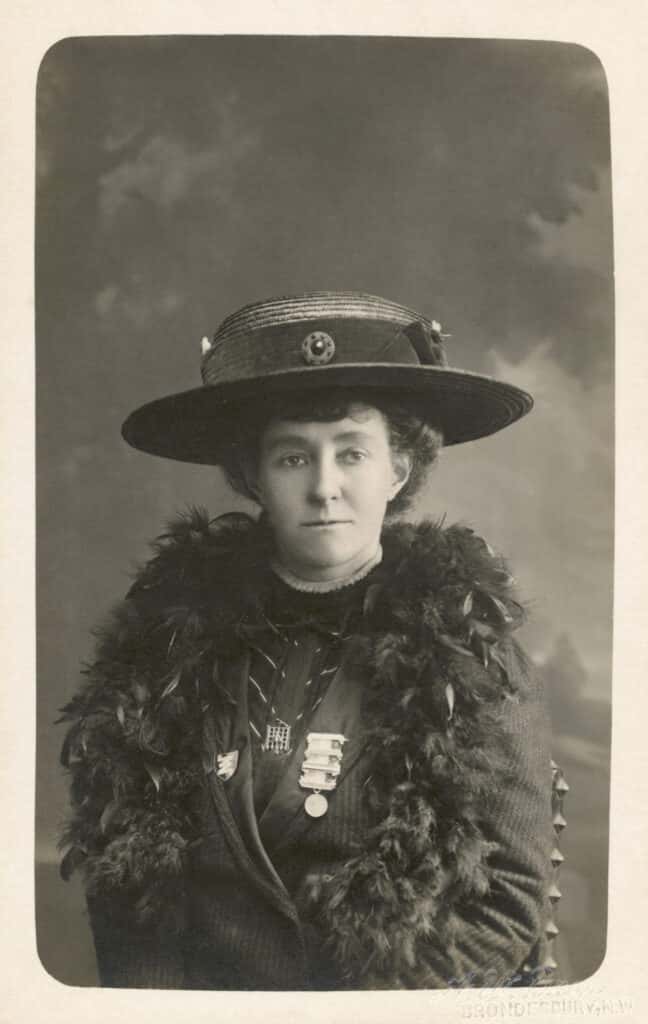
On October 11, 1872, Emily Wilding Davison came into the world in Greenwich, London. What followed was a life poured entirely into the struggle for justice and the unyielding campaign for women's suffrage in Britain. Hers is a tale defined by remarkable bravery and an unshakeable commitment to gender equality—a journey that would reach its climax in one of the suffragette movement's most iconic and deeply controversial episodes.
Early Life
Growing up in a middle-class household, Davison had the advantage of early educational opportunities. Her academic path took her through Kensington High School, Royal Holloway College, and St Hugh's College, Oxford, where she earned first-class honors in English. Yet Oxford refused to confer degrees upon women during that era, denying her the formal recognition she had earned. Still, her intellectual brilliance and fierce determination were unmistakable—qualities that would eventually fuel her life as an activist.
In 1906, Davison became a member of the Women's Social and Political Union (WSPU), the militant suffrage organization that Emmeline Pankhurst had founded. Emily Davison swiftly made a name for herself within the group, gaining a reputation for fearless action and radical methods. Convinced that peaceful demonstrations alone would achieve nothing, she threw herself into provocative acts of defiance: smashing windows, setting fire to postboxes, concealing herself inside Parliament on census night, and facing arrest time after time. Altogether, she endured nine imprisonments and undertook seven hunger strikes, which subjected her to a staggering 49 episodes of violent force-feeding.
A Harrowing Moment
During 1912, Emily Davison hurled herself down a staircase inside her prison as an act of defiance against the agonizing practice of force-feeding. Though she survived the fall, it left her with injuries that would persist. Her willingness to take such extreme measures was not always supported by the WSPU's leadership, and her relationship with the organization grew complicated and frequently tense. Even so, her devotion to the cause never wavered.
What Emily Davison is most remembered for is her final, deadly act of protest. At the Epsom Derby on June 4, 1913, she walked directly onto the racetrack as the horses thundered past. Anmer, the horse belonging to King George V, collided with her, and four days later she succumbed to a fractured skull. Historians continue to debate what she truly intended—was it a deliberate act of self-sacrifice, or had she been trying to fasten a suffragette banner to the horse? Whatever her plan, her death succeeded in focusing the world's gaze on the fight for women's suffrage.
Her Legacy
On June 14, 1913, her funeral procession wound through the streets of London in a massive display of solidarity, with 5,000 suffragettes marching and an estimated 50,000 mourners looking on. Engraved on her coffin was the stirring suffragette slogan: "Fight on. God will give the victory." She was buried in Morpeth, Northumberland, where her headstone carries the WSPU motto: "Deeds, not words."