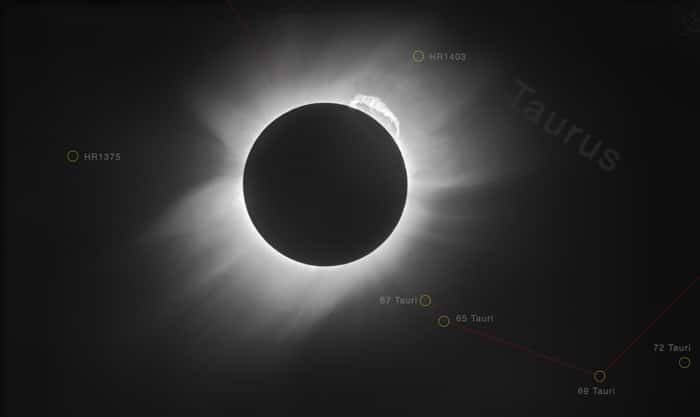
Scientists around the globe were presented with an extraordinary opportunity on October 10, 1912. Albert Einstein, a German physicist, had put forward a number of hypotheses about how the Sun could bend light. That day's total solar eclipse gave researchers their very first chance to put Einstein's theories to the test by measuring how the Sun's gravitational pull deflected starlight.
Einstein's 1911 Theory
A groundbreaking theory known as the Equivalence Principle was proposed by Einstein in 1911. At its core, the principle holds that gravitational mass and inertial mass are fundamentally identical — meaning that an object has no way of telling the difference between sitting in a gravitational field and undergoing constant acceleration.
From this foundation, Einstein developed the idea of "spacetime," a four-dimensional continuum where space and time are woven together. Massive objects like planets and stars warp this fabric of spacetime, producing what we experience as gravity. Taking the concept further, Einstein reasoned that gravity doesn't just act on matter — it can also bend or deflect beams of light as they travel near massive objects, such as the sun.
Total Solar Eclipse
The total solar eclipse projected for October 10, 1912, offered scientists and astronomers an ideal occasion to put Einstein's Equivalence Principle to the test.
Totality traced a path visible from Ecuador, Colombia, Peru, and Brazil, while observers across North America, South America, Antarctica, and Africa could witness a partial eclipse. The maximum duration of totality lasted for nearly 2 minutes. Multiple institutions dispatched expeditions to Brazil with the goal of taking measurements and gathering data that could validate Einstein's 1911 theories.
Unsuccessful, Yet Significant
For all the meticulous preparation that went into the Brazilian expeditions, nature had other plans. Severe thunderstorms and heavy rainfall thwarted every effort, leaving the sky far too overcast to collect any meaningful data on the bending of light.
While the 1912 solar eclipse ultimately failed to yield the observations needed to confirm Einstein's theory, it nonetheless represented the first-ever attempt to make such measurements. More importantly, it paved the way for future successes — most notably the landmark observations carried out by Arthur Eddington during the 1919 solar eclipse.