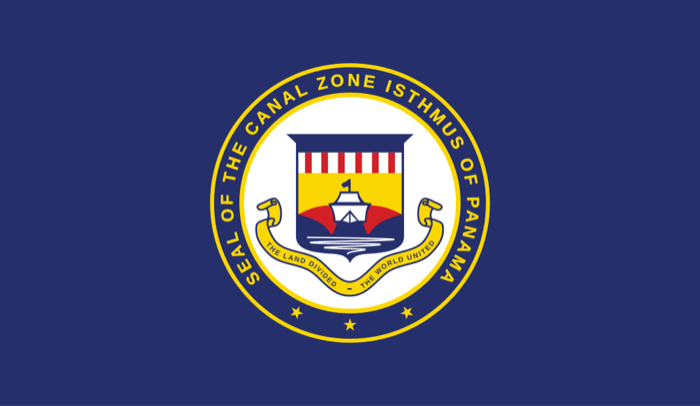
The transfer of the Panama Canal Zone back to Panama on October 1, 1979, brought to a close 76 years of American authority in Central America. For the first time since 1903, Panama reclaimed sovereignty over the strip of land that had literally split the country in two — a territory that had fueled national pride, sparked fierce protests, and ignited political battles for decades.
A Nation Divided
Dreams of carving a canal through Panama stretch all the way back to the Spanish conquest in the 1500s, but it took until the early 20th century for the United States to turn that vision into reality. In 1903, after backing Panama's break from Colombia, the U.S. government locked in the Hay-Bunau-Varilla Treaty — an agreement handing Washington control over a 553-square-mile Canal Zone "in perpetuity." From 1904 to 1914, American engineers and workers carved the waterway through unforgiving jungle and mountainous terrain, suffering significant human losses along the way. What emerged wasn't just a canal — it was an American enclave with its own government, police force, courts, schools, and even postage stamps. Those who lived there called themselves "Zonians."
To the United States, the canal stood as an engineering marvel and a cornerstone of global commerce. But Panamanians saw something very different: the Zone served as a constant, visible reminder of foreign dominance that carved their nation apart — both physically and politically.
Clashes and Protests
That resentment didn't fade — it deepened with time. Panamanians increasingly viewed the Zone as a direct affront to their national sovereignty. Violent riots broke out in 1958 and 1959, and then again in January 1964, when a confrontation over flag displays spiraled into days of bloodshed. Dozens lost their lives, and diplomatic ties between Washington and Panama teetered on the edge of collapse. The U.S. made concessions over the years, permitting Panamanian flags to fly alongside American ones, yet calls for full sovereignty only intensified.
The 1970s ushered in a new chapter of serious negotiations over the canal's future. General Omar Torrijos, Panama's leader, demanded nothing less than complete control. U.S. President Jimmy Carter recognized the rising tide of nationalism and understood the deep symbolic weight the Canal Zone carried. In 1977, Carter and Torrijos put pen to paper on two landmark treaties. Under the first, the Canal Zone would be formally abolished on October 1, 1979. The second laid out a timeline for the United States to hand over full operational control of the canal by December 31, 1999.
The Day of Handover
Once the treaties went into effect, the Zone simply ceased to exist as a political entity. Panama took charge of much of the territory, although dozens of U.S. military bases and facilities continued to operate under joint or American control until the final transfer was completed. For the Zonians, it was an emotional moment — many felt a deep attachment to the distinctive community they had built, while others had come to accept the outcome as unavoidable.
Panama treated the occasion as a watershed moment — a reclaiming of land that had stood as a symbol of outside domination for generations. For the United States, it represented both a leap of faith and a tacit acknowledgment that the days of maintaining colonial-style enclaves across Latin America had reached their end.
A Symbol Beyond Trade
Joint management of the canal itself continued until the final handover took place in 1999. Yet the 1979 transfer did far more than redraw boundaries — it fundamentally reshaped Panama's national identity.