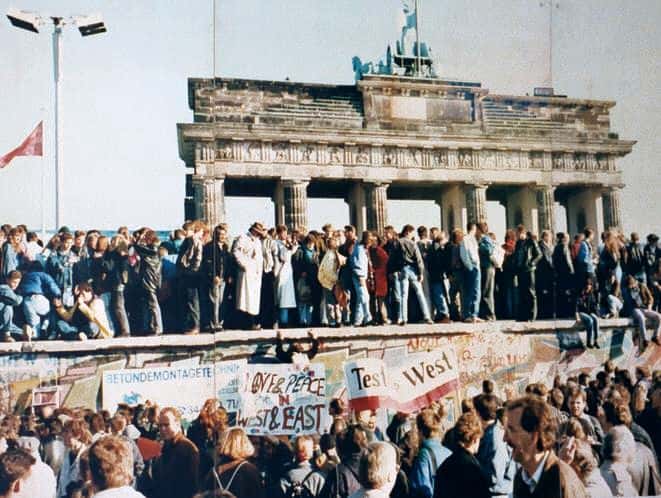
On this day in history, a concrete barrier that had carved a city in two—and stood as the ultimate symbol of a fractured world—finally gave way. November 9, 1989, was the day the Berlin Wall fell. There were no bombs involved. No treaties signed. Instead, it took a botched announcement, an unstoppable crowd, and the sheer force of history surging forward.
Before The Fall
The Wall served as the Cold War's most brutal dividing line for 28 years. When East Germany erected the Berlin Wall in 1961, it was far more than bricks and barbed wire. It was a full-blown fortress—complete with soldiers, mines, and death strips—all designed to prevent East Berliners from escaping to the West. Yet no matter how imposing, the Wall was never strong enough to contain people's desire for freedom.
A wave of transformation was sweeping through Eastern Europe by the late 1980s.
- Poland elected a non-Communist leader.
- Hungary opened its border with Austria.
- Czechoslovakia stirred with protest.
- And in East Germany, public pressure boiled over.
Then Came November 9, 1989.
During a press conference, Communist Party official Günter Schabowski shuffled through his notes, misread a memo, and offhandedly declared that East Berliners could cross into the West "immediately." The news spread like wildfire.
By that evening, thousands of East Berliners had massed at the Wall's checkpoints. Overwhelmed and lacking clear instructions, the guards simply opened the gates. There were no orders from above. No shots rang out. The borders just opened.
People poured through in waves. Some climbed on top of the Wall and danced. Others grabbed hammers or used their bare fists to chip away pieces, tears streaming down their faces. The Wall didn't merely fall—it buckled under the weight of its own irrelevance.
Why did this Matter so Much?
Far more than a physical barrier dividing Berlin, the Wall embodied the entire Cold War struggle. Its collapse marked a decisive turning point: the Cold War was effectively over. Germany achieved reunification within a year, and the Soviet Union itself dissolved within two years, fundamentally redrawing the map of Europe. None of it was planned, none of it was expected, and none of it could be stopped. President George H.W. Bush, wary of provoking Soviet hardliners, projected a calm demeanor publicly. Behind the scenes, though, diplomatic efforts kicked into high gear.
American and European leaders carefully managed the aftershocks. New alliances took shape. Old fears dissolved. And for millions of people, freedom became something tangible for the very first time.
Today, pieces of the Wall sit in museums around the world.